Air filter standards are essential for evaluating performance and selecting the right filtration solution. For many years, IN 779 was the dominant standard in Europe. Tuttavia, it has now been replaced by ISO 16890, which offers a more realistic and globally applicable approach.
In questo articolo, we compare ISO 16890 e EN 779 to help you understand their differences and implications for filter selection and testing.
1. Overview of EN 779 e ISO 16890
IN 779 (Legacy Standard)
IN 779 classified filters based on their efficiency using synthetic dust.
Classification system:
- G1–G4 (coarse filters)
- F5–F9 (filtri fini)
While simple, this system had limitations in representing real-world air pollution.
ISO 16890 (Current Standard)
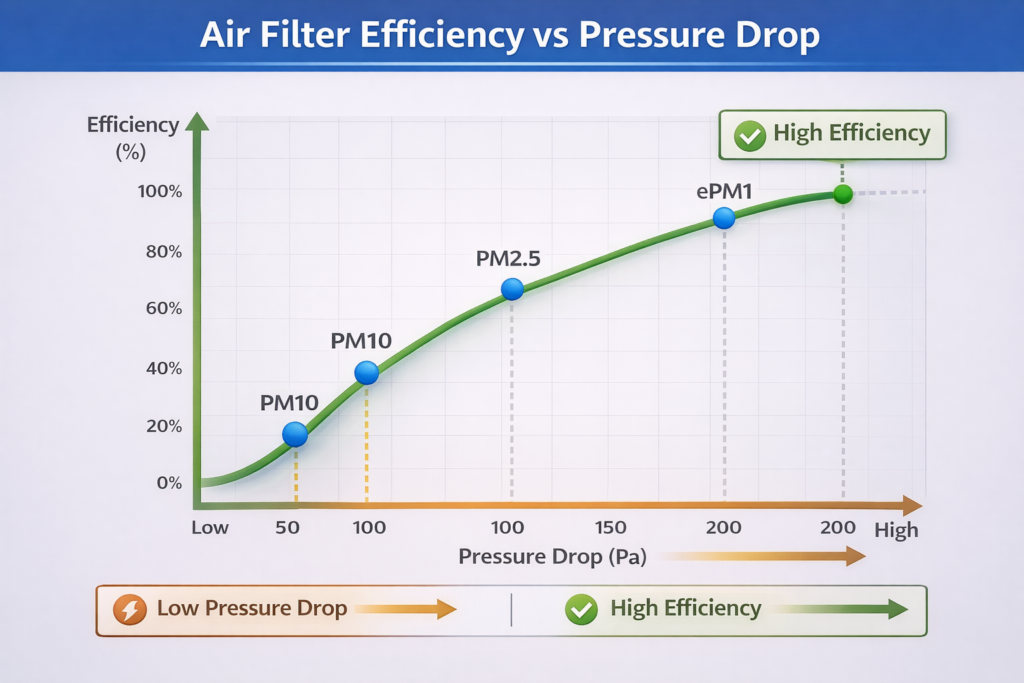
ISO 16890 replaces EN 779 and classifies filters based on their ability to remove particulate matter (PM).
Classification system:
- Grossolano
- ePM10
- ePM2.5
- ePM1
👉 This shift aligns filtration performance with actual environmental conditions and human health impact.
2. Differenze chiave tra ISO 16890 e EN 779
| Aspetto | ISO 16890 | IN 779 |
|---|---|---|
| Base | Dimensioni reali delle particelle (PM1, PM2,5, PM10) | Polvere sintetica |
| Classificazione | sistema ePM | G / Classi F |
| Rilevanza nel mondo reale | Alto | Limitato |
| Adozione globale | Internazionale | Principalmente Europa (obsoleto) |
| Processo di test | Multi-passo (compreso lo scarico) | Più semplice |
👉 La differenza più grande è che ISO 16890 riflette vere e proprie particelle atmosferiche, mentre DENTRO 779 no.
3. Confronto di classificazione
| IN 779 | ISO 16890 Equivalente |
|---|---|
| G1–G4 | ISO grossolana |
| Fa5-fa6 | ePM10 |
| Fa7-fa8 | ePM2.5 |
| F9 | ePM1 |
⚠️ Nota:
Queste equivalenze sono approssimative e dipendono dai risultati effettivi dei test.
4. Differenze nei metodi di prova
IN 779 Test
- Utilizza polvere sintetica
- Si concentra sull'arresto medio e sull'efficienza
- Nessun processo di dimissione
ISO 16890 Test
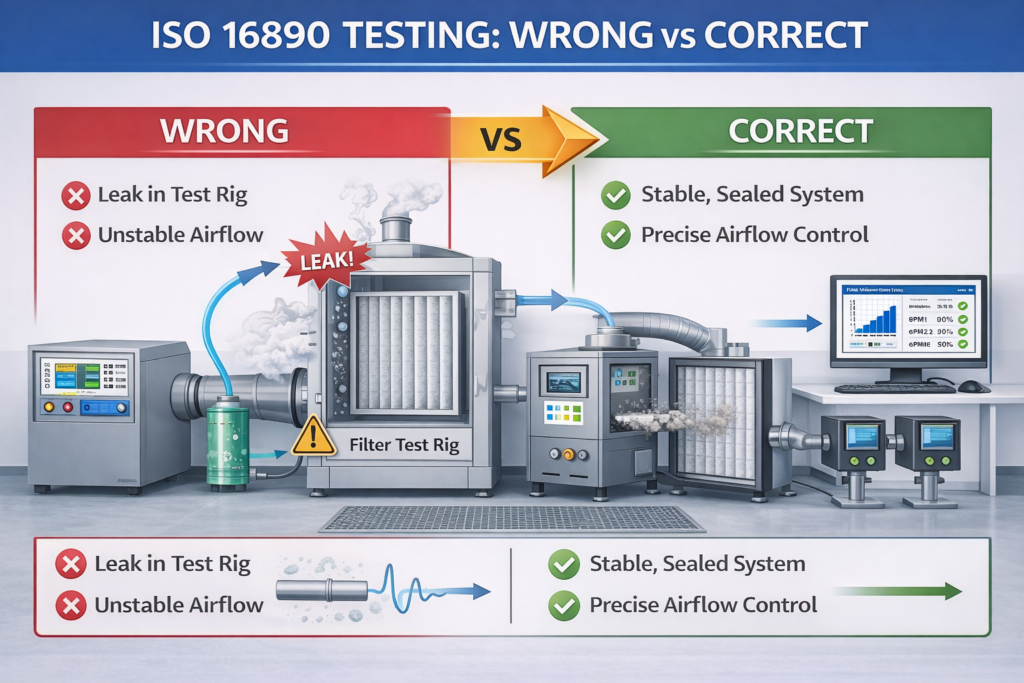
ISO 16890 introduce un metodo più completo:
- Misurazione iniziale dell'efficienza
- Scarico (condizionata) per eliminare gli effetti elettrostatici
- Prova di carico di polvere
- Calcolo dell'efficienza media
👉 Ciò garantisce che le prestazioni del filtro riflettano condizioni operative reali nel tempo.
5. Perché ISO 16890 Sostituito IT 779
ISO 16890 è stato introdotto per affrontare le principali limitazioni di EN 779:
✔ Lack of correlation with PM pollution
✔ Overestimation of electrostatic filter performance
✔ Limited global applicability
By focusing on PM-based efficiency, ISO 16890 fornisce:
- Better indoor air quality evaluation
- More accurate filter selection
- Improved international consistency
6. Practical Impact for Manufacturers and Users
For Manufacturers
- Need to redesign products for PM-based performance
- Must upgrade testing capabilities
For End Users
- Easier to select filters based on actual needs
- Better understanding of air quality impact
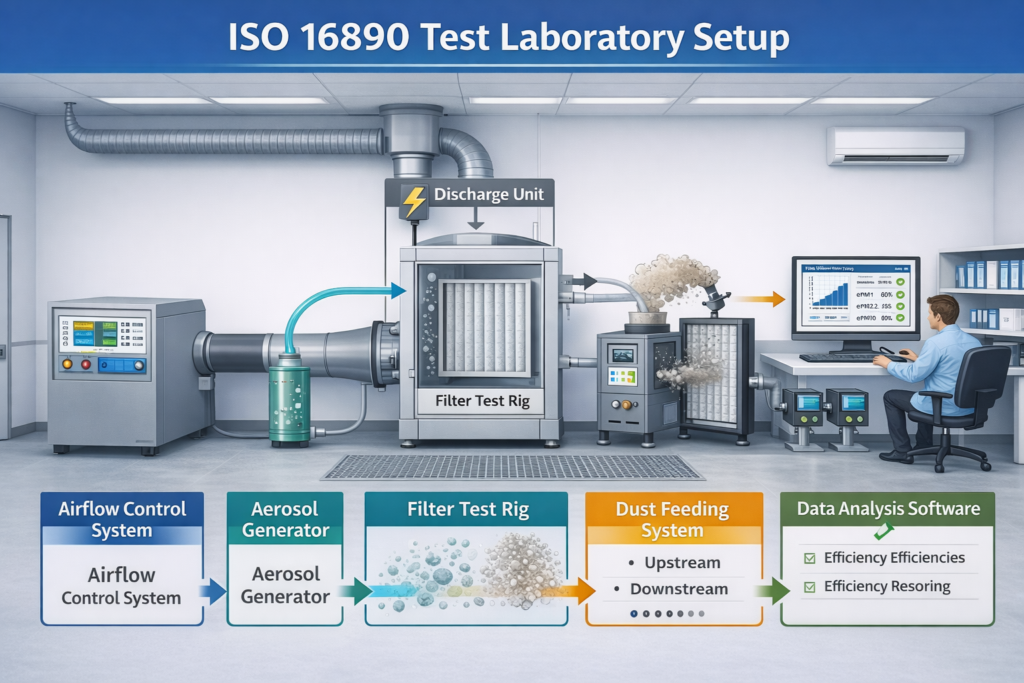
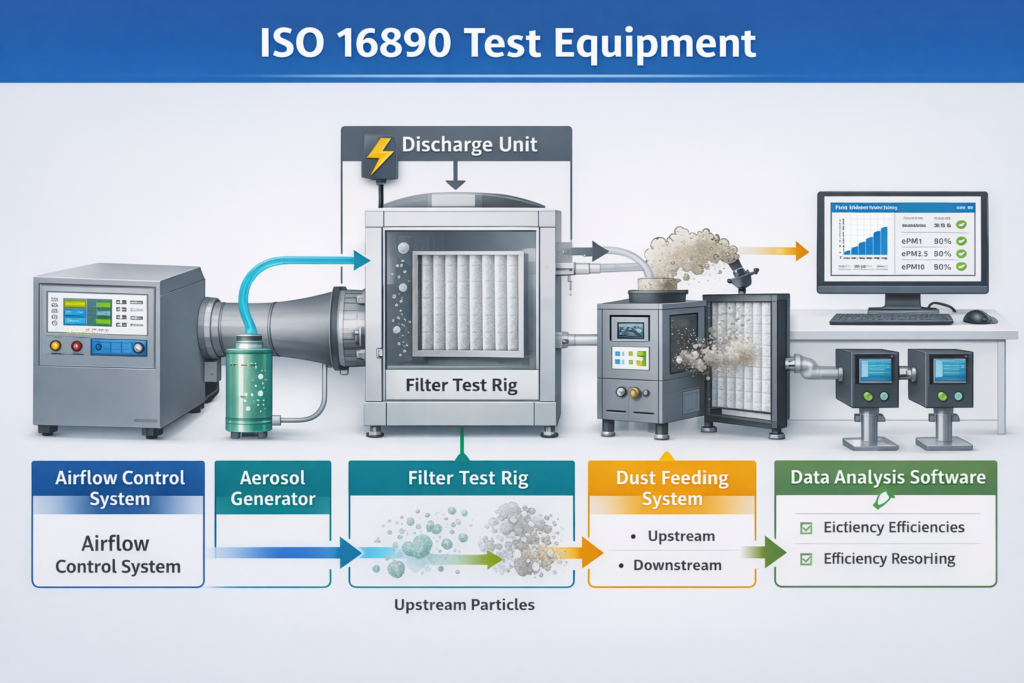
7. Testing Equipment Requirements
Per conformarsi alla norma ISO 16890, advanced testing systems are required, compreso:
- Misurazione della dimensione delle particelle
- Controlled airflow system
- Dust feeding and conditioning modules
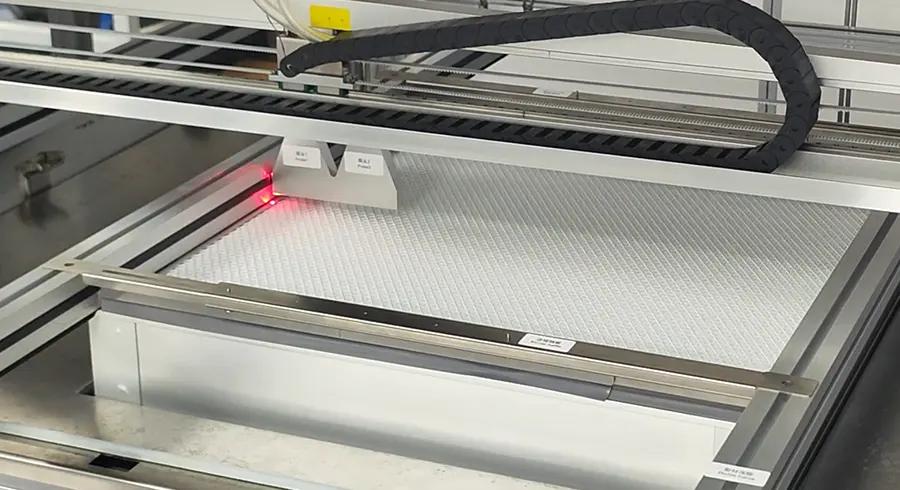
Per esempio, IL SC-16890 Sistema di test generale del filtro di ventilazione di SCPUR è progettato specificamente per ISO 16890 test.
Key features:
- PM1 accurato / PM2,5 / Misura dell'efficienza PM10
- Automated testing process
- Stable and repeatable results
👉 This ensures reliable compliance with modern air filtration standards.
8. Conclusione
While EN 779 played an important historical role, it has been effectively replaced by ISO 16890, which offers a more realistic and globally relevant evaluation of air filter performance.
For modern applications, ISO 16890 is now the preferred standard, helping ensure better air quality and more accurate filter selection.