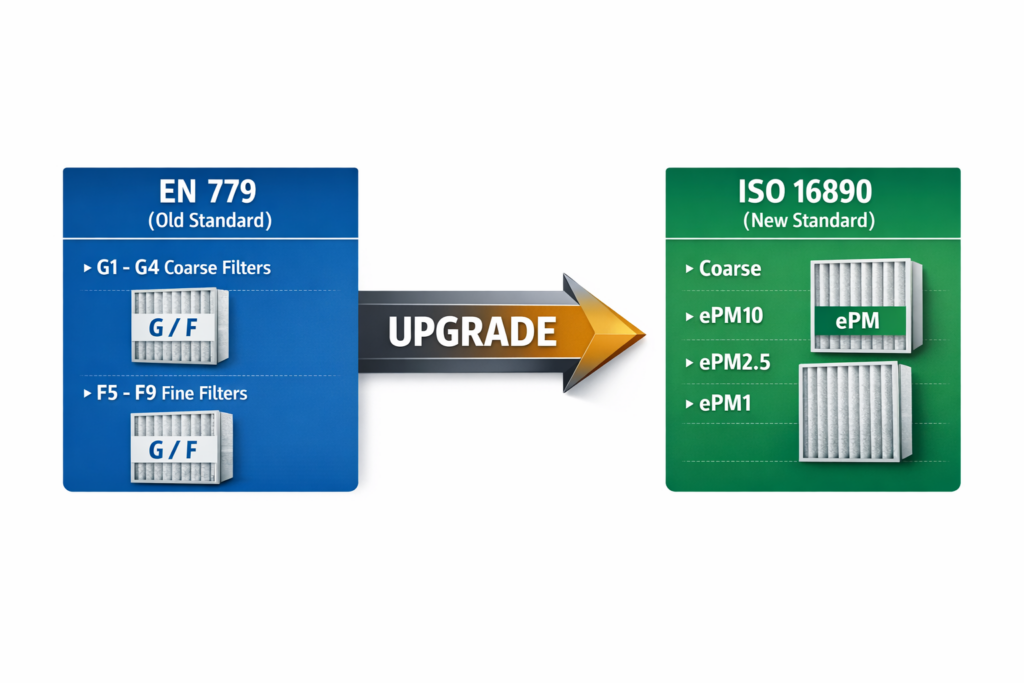
Air filter standards are essential for evaluating performance and selecting the right filtration solution. For many years, EN 779 was the dominant standard in Europe. However, it has now been replaced by ISO 16890, which offers a more realistic and globally applicable approach.
In this article, we compare ISO 16890 and EN 779 to help you understand their differences and implications for filter selection and testing.
1. Overview of EN 779 and ISO 16890
EN 779 (Legacy Standard)
EN 779 classified filters based on their efficiency using synthetic dust.
Classification system:
- G1–G4 (coarse filters)
- F5–F9 (fine filters)
While simple, this system had limitations in representing real-world air pollution.
ISO 16890 (Current Standard)
ISO 16890 replaces EN 779 and classifies filters based on their ability to remove particulate matter (PM).
Classification system:
- Coarse
- ePM10
- ePM2.5
- ePM1
👉 This shift aligns filtration performance with actual environmental conditions and human health impact.
2. Key Differences Between ISO 16890 and EN 779
| Aspect | ISO 16890 | EN 779 |
|---|---|---|
| Basis | Real particle sizes (PM1, PM2.5, PM10) | Synthetic dust |
| Classification | ePM system | G / F classes |
| Real-world relevance | High | Limited |
| Global adoption | International | Mainly Europe (obsolete) |
| Testing process | Multi-step (including discharge) | Simpler |
👉 The biggest difference is that ISO 16890 reflects real atmospheric particles, while EN 779 does not.
3. Classification Comparison
| EN 779 | ISO 16890 Equivalent |
|---|---|
| G1–G4 | ISO Coarse |
| F5–F6 | ePM10 |
| F7–F8 | ePM2.5 |
| F9 | ePM1 |
⚠️ Note:
These equivalences are approximate and depend on actual test results.
4. Differences in Testing Methods
EN 779 Testing
- Uses synthetic dust
- Focuses on average arrestance and efficiency
- No discharge process
ISO 16890 Testing
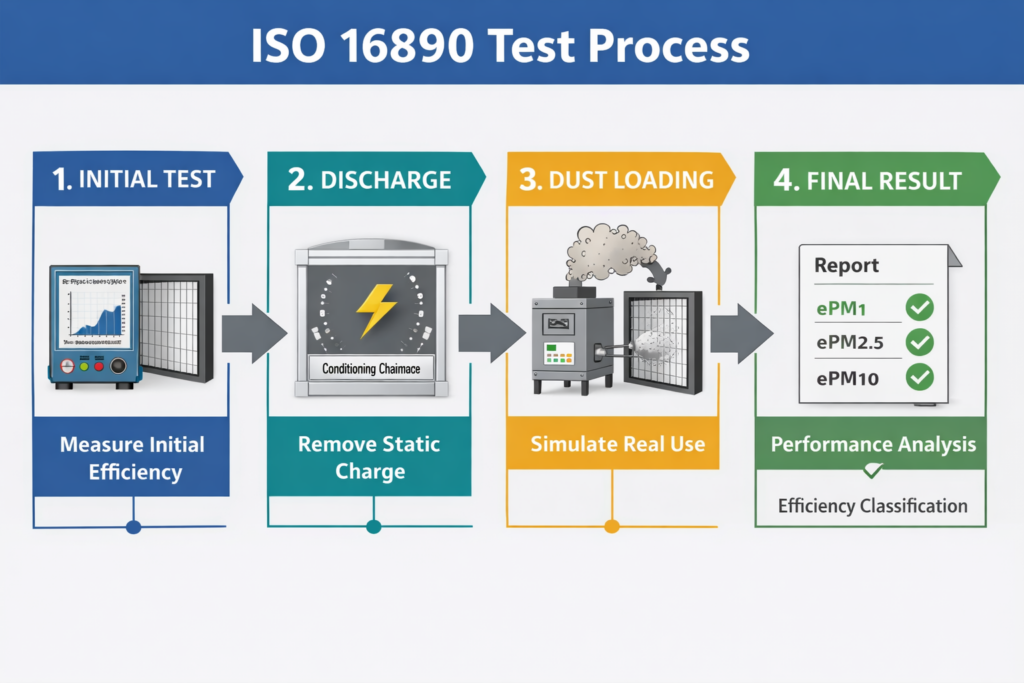
ISO 16890 introduces a more comprehensive method:
- Initial efficiency measurement
- Discharge (conditioning) to remove electrostatic effects
- Dust loading test
- Calculation of average efficiency
👉 This ensures that filter performance reflects real operating conditions over time.
5. Why ISO 16890 Replaced EN 779
ISO 16890 was introduced to address key limitations of EN 779:
✔ Lack of correlation with PM pollution
✔ Overestimation of electrostatic filter performance
✔ Limited global applicability
By focusing on PM-based efficiency, ISO 16890 provides:
- Better indoor air quality evaluation
- More accurate filter selection
- Improved international consistency
6. Practical Impact for Manufacturers and Users
For Manufacturers
- Need to redesign products for PM-based performance
- Must upgrade testing capabilities
For End Users
- Easier to select filters based on actual needs
- Better understanding of air quality impact
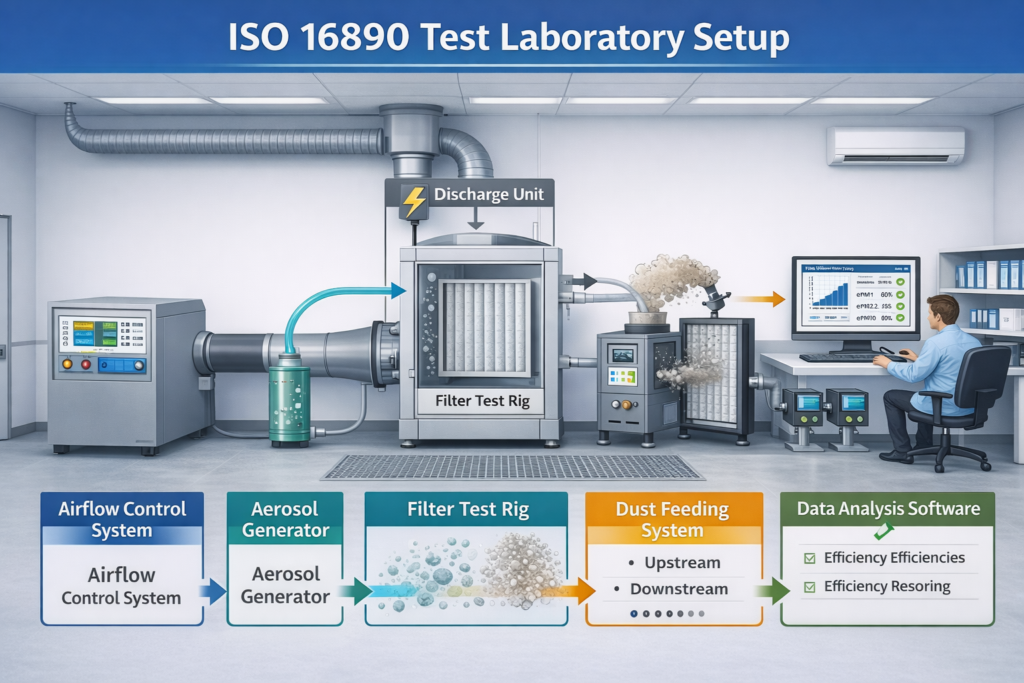
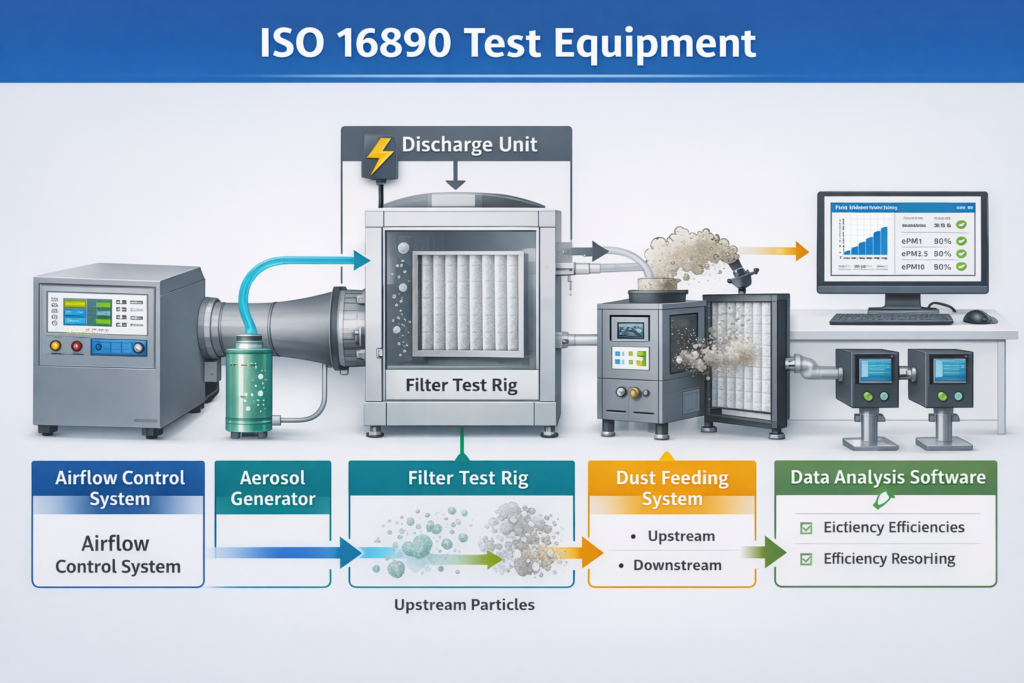
7. Testing Equipment Requirements
To comply with ISO 16890, advanced testing systems are required, including:
- Particle size measurement
- Controlled airflow system
- Dust feeding and conditioning modules
For example, the SC-16890 General Ventilation Filter Test System from SCPUR is designed specifically for ISO 16890 testing.
Key features:
- Accurate PM1 / PM2.5 / PM10 efficiency measurement
- Automated testing process
- Stable and repeatable results
👉 This ensures reliable compliance with modern air filtration standards.
8. Conclusion
While EN 779 played an important historical role, it has been effectively replaced by ISO 16890, which offers a more realistic and globally relevant evaluation of air filter performance.
For modern applications, ISO 16890 is now the preferred standard, helping ensure better air quality and more accurate filter selection.