>

ブログ

>

Five Common HEPA Filter Leak Detection Methods

Five Common HEPA Filter Leak Detection Methods

共有:

目次

Leak detection of high-efficiency filters (HEPA/ULPA) is a critical part of cleanroom validation.
With the implementation of GMP standards, especially in pharmaceutical industries, HEPA filter leak testing has become a mandatory inspection requirement.

今日, industries such as pharmaceuticals, hospitals, electronics, food, and cosmetics all require reliable HEPA filter integrity testing to ensure cleanroom performance.

Below are five common HEPA filter leak detection methods used in practice.


1. Sodium Flame Method

The sodium flame method uses sodium chloride (NaCl) aerosol as the test challenge.

The aerosol is generated by atomizing a salt solution using compressed air. After drying, fine salt particles enter the air duct. Air samples are taken upstream and downstream of the filter and introduced into a hydrogen flame.

The presence of sodium causes the flame to change color and brightness, which is used to estimate particle concentration and filter efficiency.

制限事項:

  • Low sensitivity
  • Not suitable for HEPA/ULPA filters
  • Rarely used in modern testing systems

2. Oil Mist Method

The oil mist method uses oil aerosols (typically paraffin oil) with particle sizes around 0.3–0.5 μm.

Filter performance is evaluated by comparing the turbidity (opacity) of air upstream and downstream of the filter.

制限事項:

  • May contaminate or damage filters
  • Results are not directly readable
  • Time-consuming

3. DOP Method (Traditional Standard Method)

The DOP method has historically been one of the most widely used methods for HEPA filter testing.

It uses dioctyl phthalate (DOP) aerosol particles with a size of approximately 0.3 μm. The aerosol is generated by heating DOP liquid, forming vapor that condenses into fine droplets.

Filter efficiency is determined by measuring aerosol concentration before and after the filter.

Notes:

  • Now often replaced by safer alternatives (例えば, PAO)
  • Still referenced in older standards and practices

4. Fluorescence Method

This method uses sodium fluorescein particles generated by a sprayer.

Air samples are collected before and after the filter, and the particles are dissolved in water. The fluorescence intensity of the solution is measured to determine particle concentration and filtration efficiency.

制限事項:

  • Complex process
  • Requires laboratory analysis
  • Not suitable for real-time leak detection

5. Particle Counting Method (Scanning Method)

The particle counting method is currently the most widely used and internationally accepted method for HEPA filter leak detection.

It complies with standards such as:

  • で 1822
  • ISO 29463

How it works

  • Aerosol (例えば, DEHS or PAO) is introduced upstream
  • A particle counter measures particle concentration
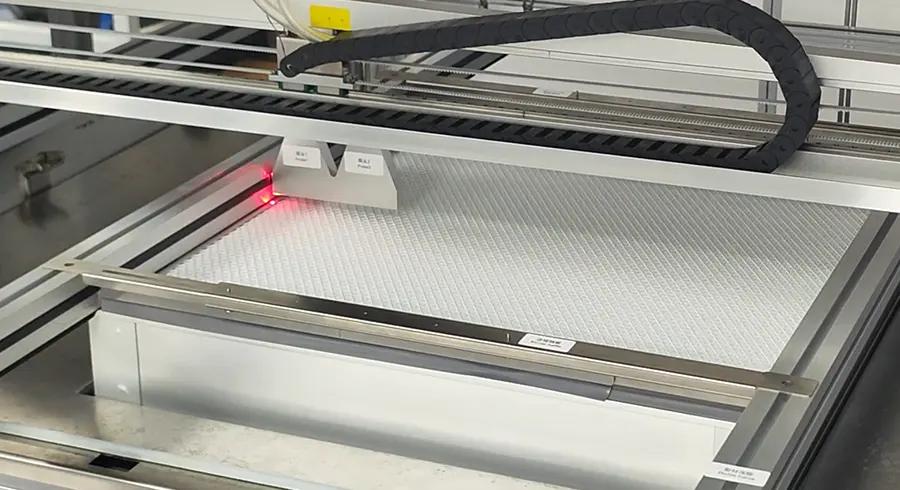
  • The entire filter surface is scanned point by point
  • Local leaks are detected based on particle concentration differences

Advantages

  • High sensitivity
  • Real-time detection
  • Accurate leak localization
  • Suitable for HEPA and ULPA filters

Recommended Solution: Automatic HEPA Filter Scanning Test Bench

For modern HEPA filter manufacturers and cleanroom applications, the particle counting scanning method is the most reliable solution.

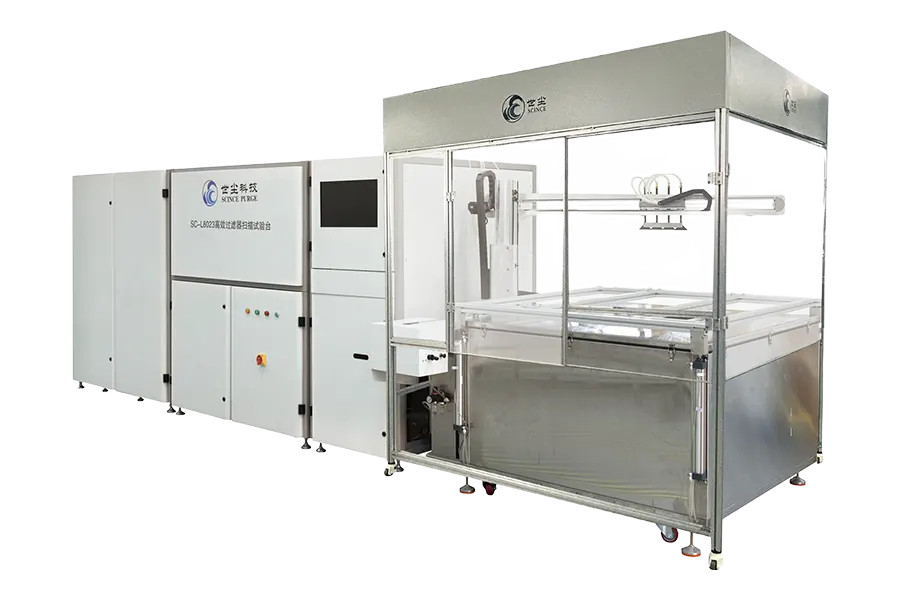
Equipment such as the SC-L8023 HEPA filter leak test bench is designed for:

  • Automatic scanning of the full filter surface
  • High-sensitivity leak detection
  • Stable aerosol generation
  • Compliance with EN 1822 およびISO 29463
hepa-filter-leak-test-bench

The system uses a high-precision particle counter and scanning mechanism to ensure consistent and repeatable testing results, making it ideal for production lines and quality control laboratories.


Conclusion

Among the five methods, traditional techniques such as sodium flame, oil mist, and fluorescence methods are gradually being replaced.

今日, the particle counting scanning method has become the industry standard due to its accuracy, efficiency, 国際規格への準拠.

For manufacturers aiming to meet strict quality requirements, investing in an automatic HEPA filter leak test system is essential.

連絡する

人気のブログ

あなたが探しているものは見つからないようです.

出発前に...

自分のプロジェクトにどの国際標準が適用されるかわからない? 当社の 10 年間の業界専門知識に基づいた個別の技術評価については、当社の上級エンジニアと相談してください。.

*私たちはあなたの秘密を尊重し、すべての情報が保護されます.

世界標準の試験システムで品質を検証

当社の専門家がお客様に合わせてカスタム ソリューションを設計いたします. あなたのプロジェクトについて教えてください, あなたの品質を正確かつ迅速に検証しましょう.

カスタムR&D & カスタマイズされたソリューション

カスタムR&D & カスタマイズされたソリューション

世界標準への準拠

世界標準への準拠

100% 自社開発ソフトウェアシステム

100% 自社開発ソフトウェアシステム

リモート校正 & グローバルサポート

リモート校正 & グローバルサポート

お問い合わせ

*私たちはあなたの秘密を尊重し、すべての情報が保護されます.