Setting up a laboratory for 国际标准化组织 16890 testing is a critical investment for air filter manufacturers, third-party laboratories, 和研究机构.
Understanding the cost structure and system requirements can help you make informed decisions and optimize your return on investment.
1. What Is an ISO 16890 Test Lab?
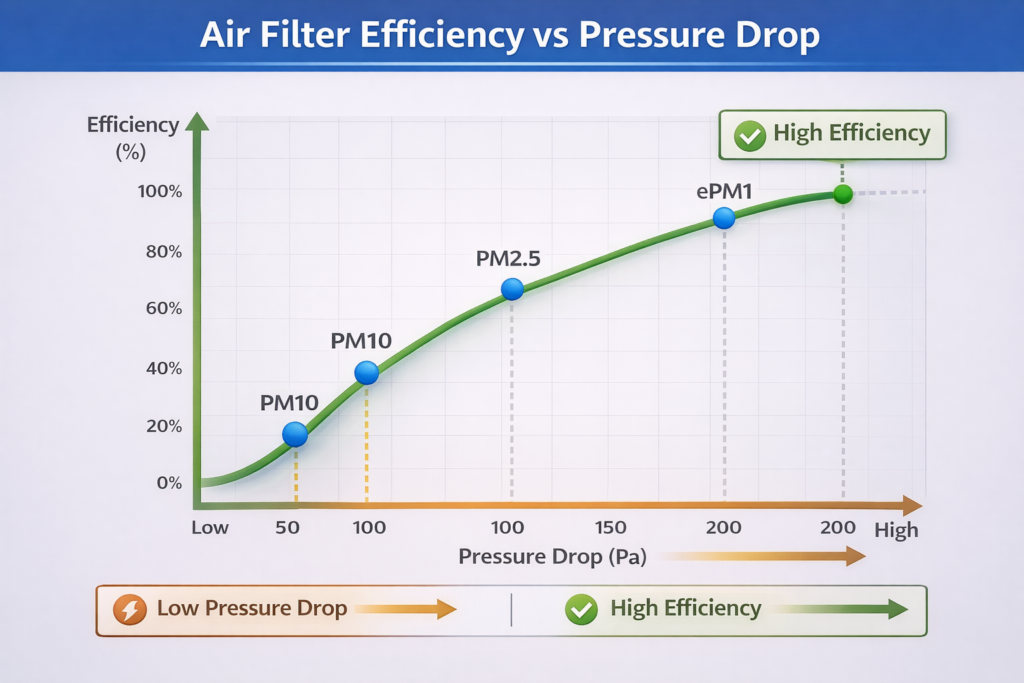
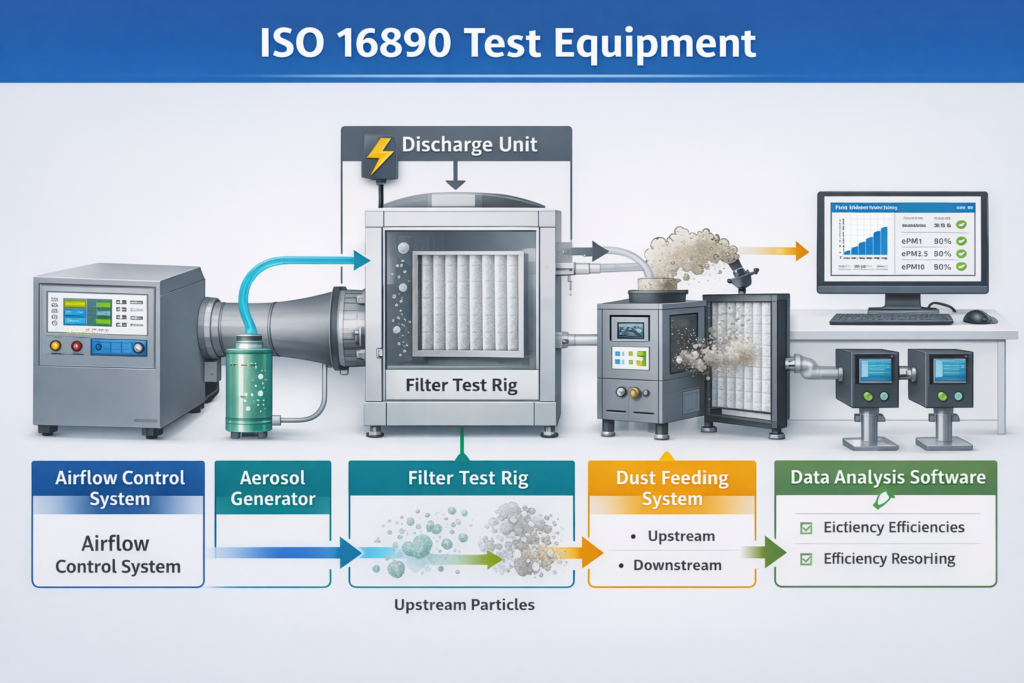
An ISO 16890 test laboratory is designed to evaluate air filters based on their efficiency in removing particulate matter (颗粒物1, PM2.5, 颗粒物10).
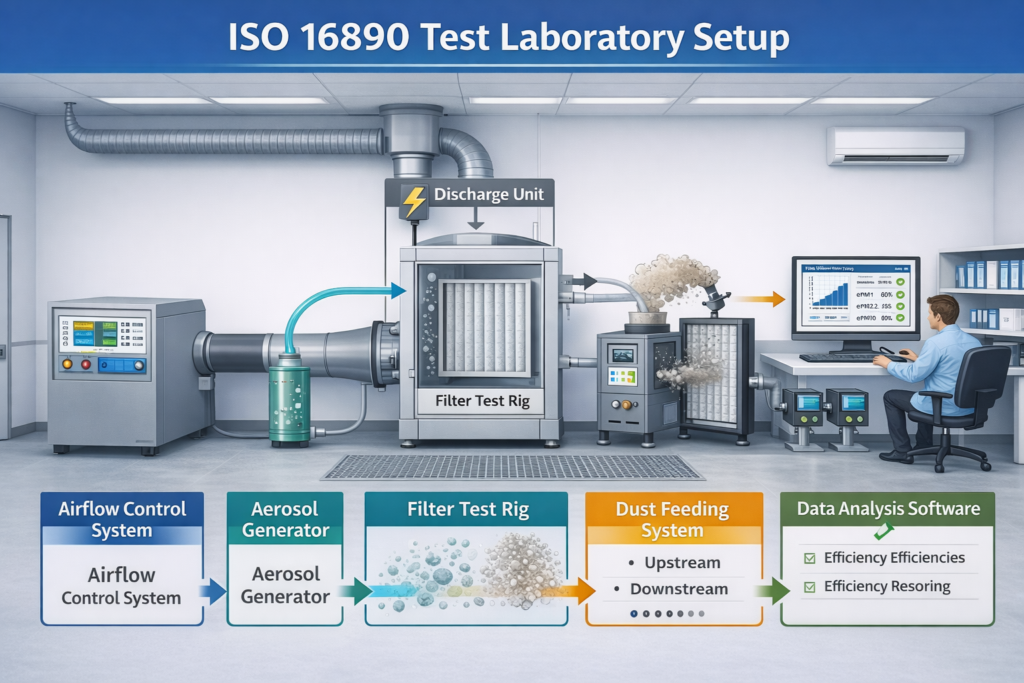
A complete lab setup includes:
- 气流控制系统
- Aerosol generation and particle measurement
- Dust feeding system
- 释放 (调理) unit
- Data acquisition and analysis software
👉 The goal is to simulate real-world operating conditions and ensure accurate classification.
2. Key Components and Cost Breakdown
The total investment depends on system configuration, automation level, and accuracy requirements.
2.1 Core Test System (Main Cost)
This is the largest portion of the investment.
Includes:
- Test duct and airflow system
- 粒子计数器
- Dust feeder and discharge system
💰 Typical cost range:
- Entry-level: $50,000 – $100,000
- Standard lab: $100,000 – $250,000
- Advanced system: $250,000+
2.2 Laboratory Infrastructure
Additional requirements include:
- Stable power supply
- Controlled environment (temperature/humidity)
- Air handling and exhaust system
💰 Estimated cost:
$20,000 – $100,000
2.3 安装 & 校准
- System installation
- Operator training
- Calibration and validation
💰 Estimated cost:
$5,000 – $30,000
2.4 Operating Costs
Ongoing expenses include:
- Test dust consumption
- Maintenance and calibration
- 能源消耗
👉 These costs directly affect long-term ROI.
3. Factors That Affect Total Cost
3.1 Accuracy Requirements
Higher precision → higher equipment cost
3.2 自动化程度
- Manual systems: lower initial cost
- Fully automated systems: higher efficiency, lower long-term cost
3.3 Testing Capacity
- 右&D labs: low throughput
- Production QC: high throughput → requires more robust systems
3.4 Compliance Level
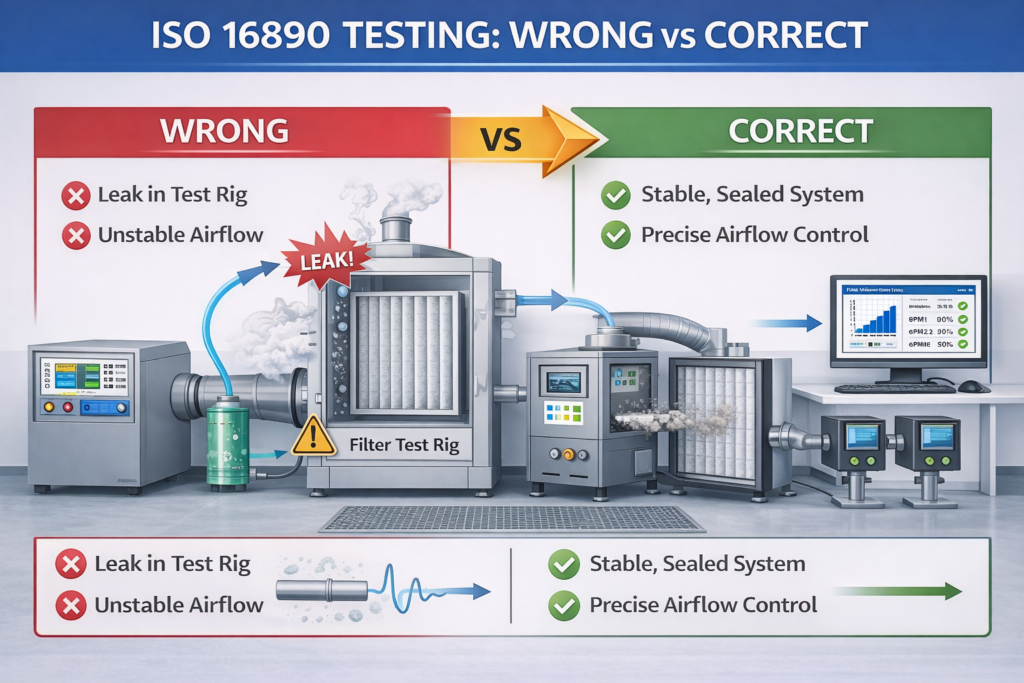
Full compliance with ISO 16890 requires:
- Discharge system
- Dust loading capability
- 粒径测量
4. How to Optimize Your Investment
To reduce cost while maintaining performance:
✔ Choose scalable systems
✔ Match system capacity to actual needs
✔ Avoid over-specification
✔ Consider long-term operating cost, not just initial price
5. 推荐解决方案: SC-16890 测试系统
For a balanced combination of performance, cost, and reliability, 这
SC-16890通用通风过滤器测试系统 from SCPUR is an ideal choice.
Why Choose SC-16890?
1. Cost-Effective Design
- Optimized configuration for ISO 16890
- Avoids unnecessary complexity
2. High Accuracy & 稳定
- Reliable PM1 / PM2.5 / PM10测量
- Stable airflow and dust feeding
3. Integrated System
- Built-in discharge and loading modules
- Simplifies lab setup
4. Easy Installation & 手术
- Faster deployment
- Lower training requirements
👉 Helps reduce both initial investment and long-term operating cost.
6. Typical Lab Setup Scenarios
Small R&D Laboratory
- Focus: material testing
- Lower budget
- Flexible configuration
Standard Testing Laboratory
- Focus: certification and quality control
- Balanced performance and cost
High-Capacity Industrial Lab
- Focus: production testing
- High automation and throughput
7. ROI Considerations
Investing in an ISO 16890 lab can bring:
- Improved product quality
- Faster certification process
- Increased market competitiveness
- Ability to offer testing services
👉 在很多情况下, ROI can be achieved within 1–3 years.
8. 结论
Building an ISO 16890 test lab requires careful planning, balancing cost, 表现, and long-term benefits.
Choosing the right system is the key to:
✔ Accurate testing
✔ Efficient operation
✔ Sustainable investment