>

博客

>

Five Common HEPA Filter Leak Detection Methods

Five Common HEPA Filter Leak Detection Methods

分享:

目录

Leak detection of high-efficiency filters (高效微粒空气过滤器/超高效空气过滤器) is a critical part of cleanroom validation.
With the implementation of GMP standards, especially in pharmaceutical industries, HEPA filter leak testing has become a mandatory inspection requirement.

今天, industries such as pharmaceuticals, hospitals, electronics, food, and cosmetics all require reliable HEPA filter integrity testing to ensure cleanroom performance.

Below are five common HEPA filter leak detection methods used in practice.


1. Sodium Flame Method

The sodium flame method uses sodium chloride (氯化钠) aerosol as the test challenge.

The aerosol is generated by atomizing a salt solution using compressed air. After drying, fine salt particles enter the air duct. Air samples are taken upstream and downstream of the filter and introduced into a hydrogen flame.

The presence of sodium causes the flame to change color and brightness, which is used to estimate particle concentration and filter efficiency.

局限性:

  • Low sensitivity
  • Not suitable for HEPA/ULPA filters
  • Rarely used in modern testing systems

2. Oil Mist Method

The oil mist method uses oil aerosols (typically paraffin oil) with particle sizes around 0.3–0.5 μm.

Filter performance is evaluated by comparing the turbidity (opacity) of air upstream and downstream of the filter.

局限性:

  • May contaminate or damage filters
  • Results are not directly readable
  • Time-consuming

3. DOP Method (Traditional Standard Method)

The DOP method has historically been one of the most widely used methods for HEPA filter testing.

It uses dioctyl phthalate (DOP) aerosol particles with a size of approximately 0.3 微米. The aerosol is generated by heating DOP liquid, forming vapor that condenses into fine droplets.

Filter efficiency is determined by measuring aerosol concentration before and after the filter.

笔记:

  • Now often replaced by safer alternatives (例如, PAO)
  • Still referenced in older standards and practices

4. Fluorescence Method

This method uses sodium fluorescein particles generated by a sprayer.

Air samples are collected before and after the filter, and the particles are dissolved in water. The fluorescence intensity of the solution is measured to determine particle concentration and filtration efficiency.

局限性:

  • Complex process
  • Requires laboratory analysis
  • Not suitable for real-time leak detection

5. Particle Counting Method (Scanning Method)

The particle counting method is currently the most widely used and internationally accepted method for HEPA filter leak detection.

It complies with standards such as:

  • 在 1822
  • 国际标准化组织 29463

How it works

  • Aerosol (例如, DEHS or PAO) is introduced upstream
  • A particle counter measures particle concentration
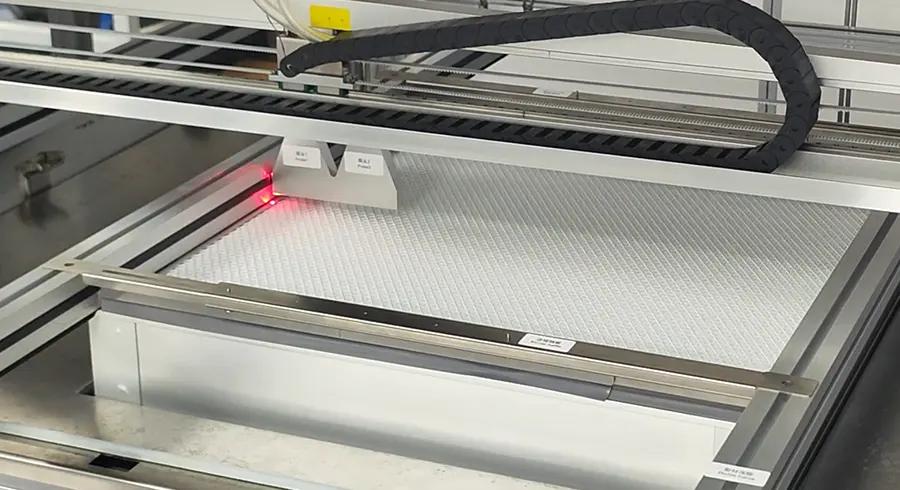
  • The entire filter surface is scanned point by point
  • Local leaks are detected based on particle concentration differences

优点

  • High sensitivity
  • Real-time detection
  • Accurate leak localization
  • Suitable for HEPA and ULPA filters

Recommended Solution: Automatic HEPA Filter Scanning Test Bench

For modern HEPA filter manufacturers and cleanroom applications, the particle counting scanning method is the most reliable solution.

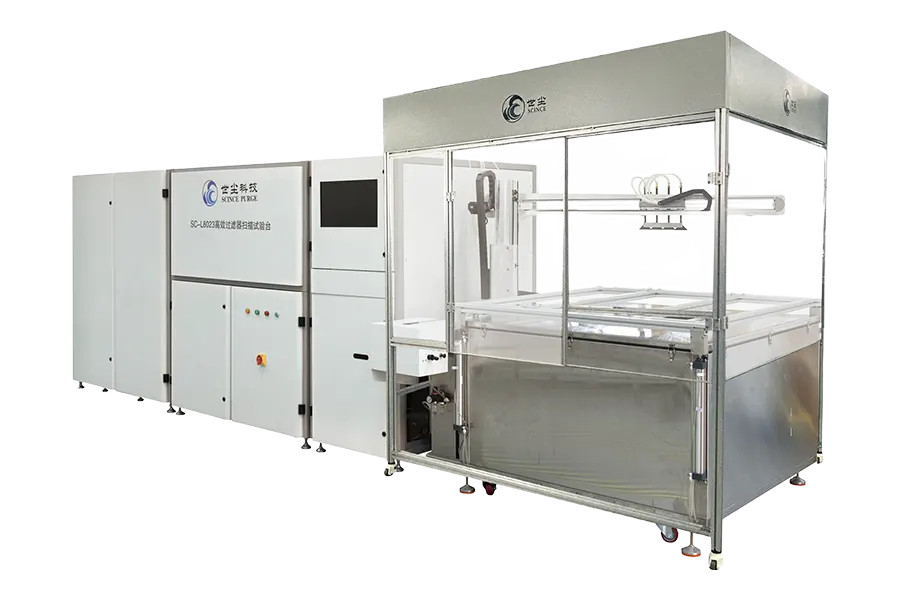
Equipment such as the SC-L8023 HEPA filter leak test bench is designed for:

  • Automatic scanning of the full filter surface
  • High-sensitivity leak detection
  • Stable aerosol generation
  • Compliance with EN 1822 和ISO 29463
hepa-filter-leak-test-bench

The system uses a high-precision particle counter and scanning mechanism to ensure consistent and repeatable testing results, making it ideal for production lines and quality control laboratories.


结论

Among the five methods, traditional techniques such as sodium flame, oil mist, and fluorescence methods are gradually being replaced.

今天, the particle counting scanning method has become the industry standard due to its accuracy, 效率, 并符合国际标准.

For manufacturers aiming to meet strict quality requirements, investing in an automatic HEPA filter leak test system is essential.

联系我们

热门博客

我们似乎找不到您要找的东西.

在你走之前...

不确定哪个国际标准适用于您的项目? 与我们的高级工程师交谈,根据我们 10 年的行业专业知识进行个性化的技术评估.

*我们尊重您的机密性,所有信息都受到保护.

使用全球标准测试系统验证您的质量

我们的专家随时准备为您设计定制解决方案. 告诉我们您的项目, 让我们以精确度和速度验证您的质量.

定制R&D & 量身定制的解决方案

定制R&D & 量身定制的解决方案

符合全球标准

符合全球标准

100% 自主研发的软件系统

100% 自主研发的软件系统

远程校准 & 全球支持

远程校准 & 全球支持

联系我们

*我们尊重您的机密性,所有信息都受到保护.