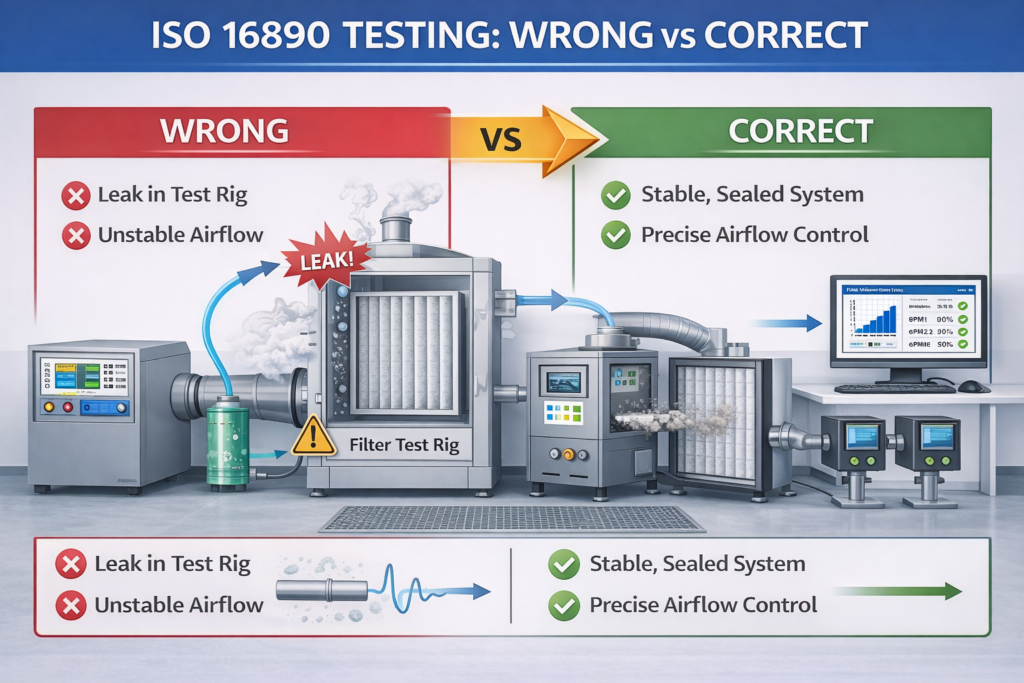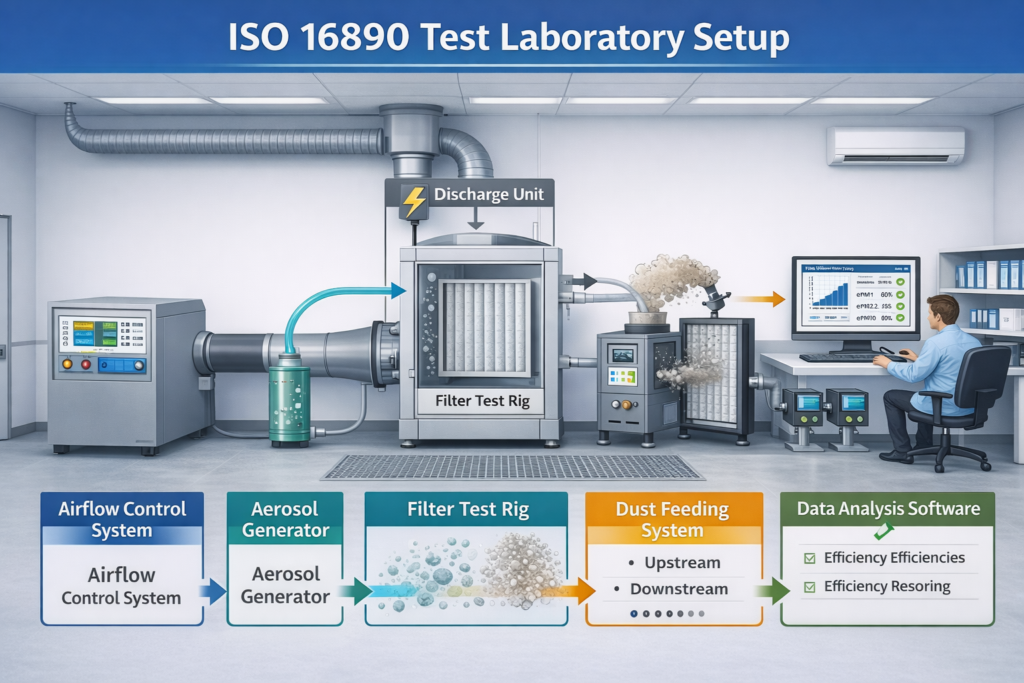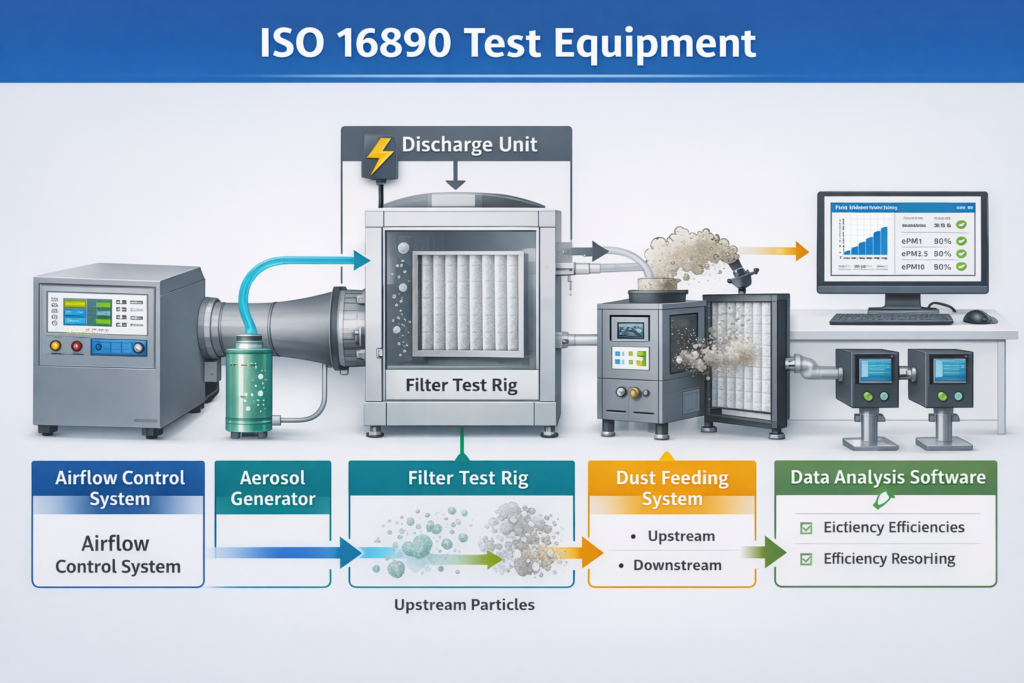
Detecção de vazamento de filtros de alta eficiência (HEPA/ULPA) é uma parte crítica da validação de salas limpas.
Com a implementação dos padrões GMP, especialmente nas indústrias farmacêuticas, O teste de vazamento do filtro HEPA tornou-se um requisito de inspeção obrigatório.
Hoje, indústrias como farmacêutica, hospitais, eletrônica, comida, e cosméticos exigem testes confiáveis de integridade do filtro HEPA para garantir o desempenho da sala limpa.
Abaixo estão cinco métodos comuns de detecção de vazamento de filtro HEPA usados na prática.
1. Método da Chama de Sódio
O método da chama de sódio usa cloreto de sódio (NaCl) aerossol como desafio de teste.
O aerossol é gerado pela atomização de uma solução salina usando ar comprimido. Depois de secar, partículas finas de sal entram no duto de ar. Amostras de ar são coletadas a montante e a jusante do filtro e introduzidas em uma chama de hidrogênio.
A presença de sódio faz com que a chama mude de cor e brilho, que é usado para estimar a concentração de partículas e a eficiência do filtro.
Limitações:
- Baixa sensibilidade
- Não é adequado para filtros HEPA/ULPA
- Raramente usado em sistemas de teste modernos
2. Método de névoa de óleo
O método de névoa de óleo usa aerossóis de óleo (normalmente óleo de parafina) com tamanhos de partícula em torno de 0,3–0,5 μm.
O desempenho do filtro é avaliado comparando a turbidez (opacidade) de ar a montante e a jusante do filtro.
Limitações:
- Pode contaminar ou danificar os filtros
- Os resultados não são diretamente legíveis
- Demorado
3. Método DOP (Método Padrão Tradicional)
O método DOP tem sido historicamente um dos métodos mais utilizados para testes de filtros HEPA..
Ele usa ftalato de dioctila (DOP) partículas de aerossol com tamanho aproximado 0.3 μm. O aerossol é gerado pelo aquecimento do líquido DOP, formando vapor que se condensa em gotículas finas.
A eficiência do filtro é determinada medindo a concentração de aerossol antes e depois do filtro.
Notas:
- Agora frequentemente substituído por alternativas mais seguras (por exemplo, PAO)
- Ainda referenciado em padrões e práticas mais antigas
4. Método de Fluorescência
Este método utiliza partículas de fluoresceína de sódio geradas por um pulverizador.
Amostras de ar são coletadas antes e depois do filtro, e as partículas são dissolvidas em água. A intensidade de fluorescência da solução é medida para determinar a concentração de partículas e a eficiência de filtração.
Limitações:
- Processo complexo
- Requer análise laboratorial
- Não é adequado para detecção de vazamento em tempo real
5. Método de contagem de partículas (Método de digitalização)
O método de contagem de partículas é atualmente o método mais utilizado e aceito internacionalmente para detecção de vazamento em filtro HEPA.
Está em conformidade com padrões como:
- EM 1822
- ISO 29463
Como funciona
- Aerossol (por exemplo, DEHS ou PAO) é introduzido a montante
- Um contador de partículas mede a concentração de partículas
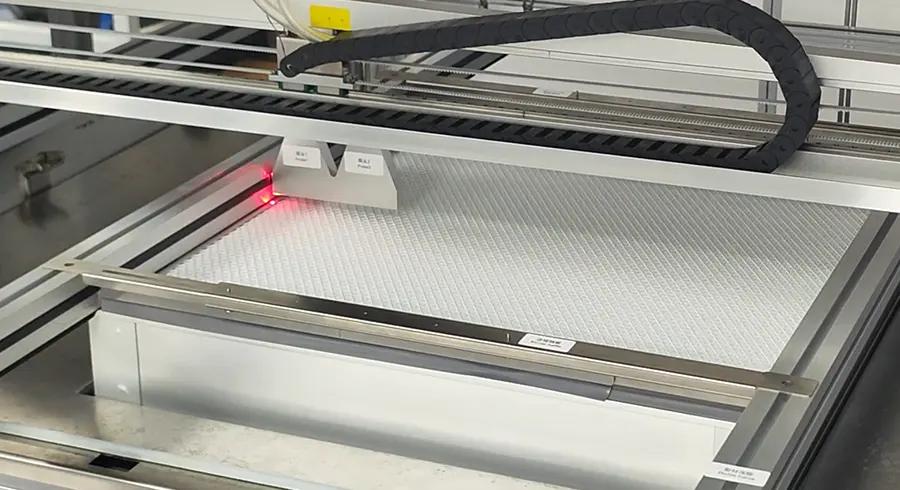
- Toda a superfície do filtro é escaneada ponto por ponto
- Vazamentos locais são detectados com base nas diferenças de concentração de partículas
Vantagens
- Alta sensibilidade
- Detecção em tempo real
- Localização precisa de vazamentos
- Adequado para filtros HEPA e ULPA
Solução recomendada: Banco de teste automático de varredura de filtro HEPA
Para fabricantes modernos de filtros HEPA e aplicações em salas limpas, o método de varredura de contagem de partículas é a solução mais confiável.
Equipamentos como o Banco de teste de vazamento de filtro HEPA SC-L8023 é projetado para:
- Varredura automática de toda a superfície do filtro
- Detecção de vazamento de alta sensibilidade
- Geração estável de aerossol
- Conformidade com EN 1822 e ISO 29463
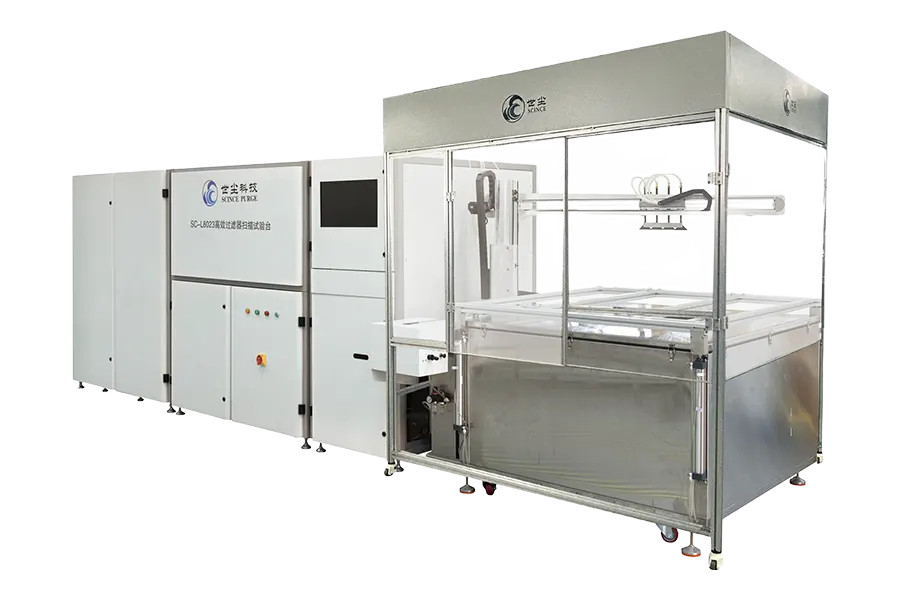
O sistema usa um contador de partículas de alta precisão e um mecanismo de varredura para garantir resultados de testes consistentes e repetíveis, tornando-o ideal para linhas de produção e laboratórios de controle de qualidade.
Conclusão
Entre os cinco métodos, técnicas tradicionais, como chama de sódio, névoa de óleo, e os métodos de fluorescência estão sendo gradualmente substituídos.
Hoje, o método de varredura de contagem de partículas tornou-se o padrão da indústria devido à sua precisão, eficiência, e conformidade com padrões internacionais.
Para fabricantes que desejam atender a rigorosos requisitos de qualidade, investir em um sistema automático de teste de vazamento de filtro HEPA é essencial.