Choosing the right air filter is essential for achieving optimal indoor air quality and system performance. With the introduction of ISO 16890, filter selection is now based on real particle size efficiency rather than outdated classifications.
This guide will help you select the most suitable filter based on your application and performance requirements.
1. Understand ISO 16890 Classification First
Before selecting a filter, it is important to understand the classification system:
- ISO Grosso → large particles (>10 μm)
- ePM10 → particles ≤10 μm
- ePM2.5 → particles ≤2.5 μm
- ePM1 → particles ≤1 μm
👉 The higher the classification, the better the filtration of fine particles.
2. Etapa 1: Define Your Application Scenario
Different environments require different filtration levels:
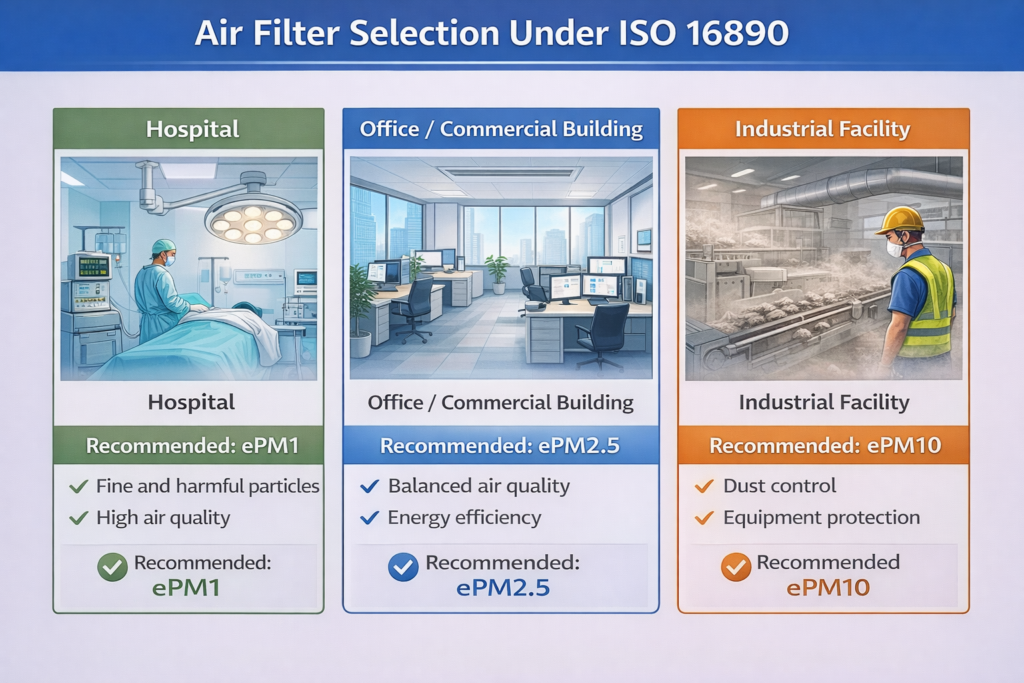
Commercial Buildings (Escritórios, Malls)
- Recomendado: ePM2.5
- Focus: balanced air quality and energy efficiency
Hospitais & Healthcare
- Recomendado: ePM1 or higher
- Focus: removal of fine and harmful particles
Industrial Facilities
- Recomendado: ePM10 or ePM2.5
- Focus: dust control and equipment protection
Residential HVAC Systems
- Recomendado: ePM2.5
- Focus: comfort and health
3. Etapa 2: Balance Efficiency and Pressure Drop
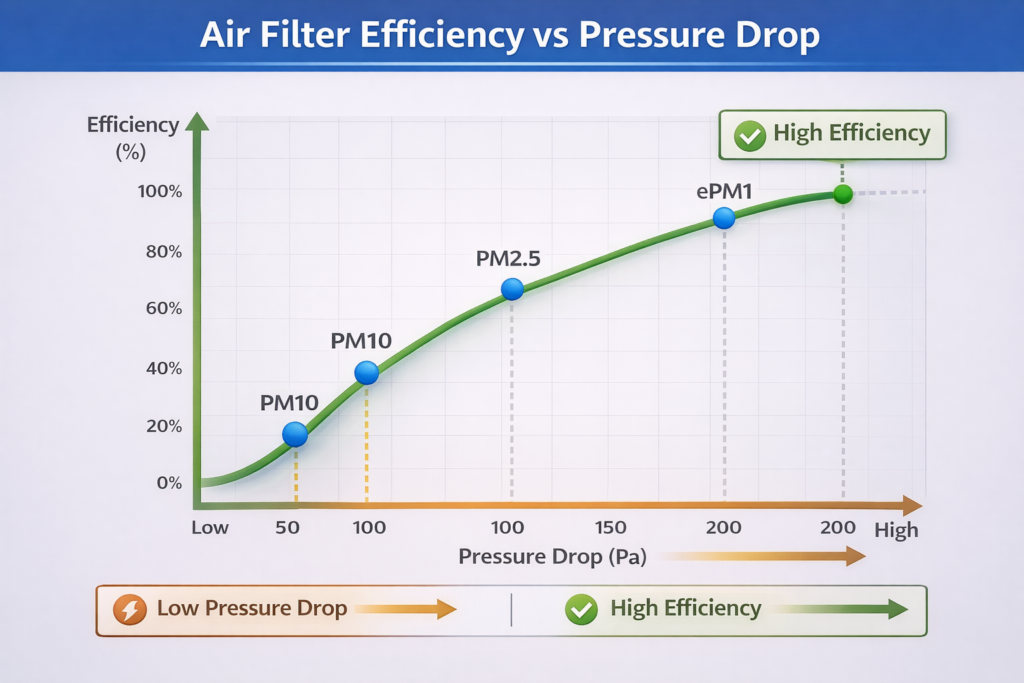
As discussed in previous sections, higher efficiency often leads to higher resistance.
👉 Key considerations:
- High efficiency → better air quality
- Low pressure drop → lower energy consumption
✔ Choose a filter that balances both factors based on your system capacity
4. Etapa 3: Consider Filter Lifespan
Filter performance changes over time due to dust loading:
- Efficiency may increase initially
- A queda de pressão aumenta continuamente
👉 A longer lifespan reduces:
- Maintenance frequency
- Operating cost
5. Etapa 4: Evaluate Real Performance (Not Just Initial Data)
Sob ISO 16890, performance is evaluated after:
- Descarga (removal of electrostatic effects)
- Dust loading
👉 This means:
Initial efficiency alone is not enough
✔ Always check average efficiency values
6. Etapa 5: Check System Compatibility
Ensure the selected filter matches:
- Airflow requirements
- Installation dimensions
- System pressure limits
👉 Incorrect selection can lead to:
- Reduced airflow
- Aumento do consumo de energia
7. Common Mistakes in Filter Selection
❌ Choosing based only on price
❌ Ignoring pressure drop
❌ Using outdated EN 779 classifications
❌ Over-specifying (unnecessary high efficiency)
👉 These mistakes increase cost without improving performance.
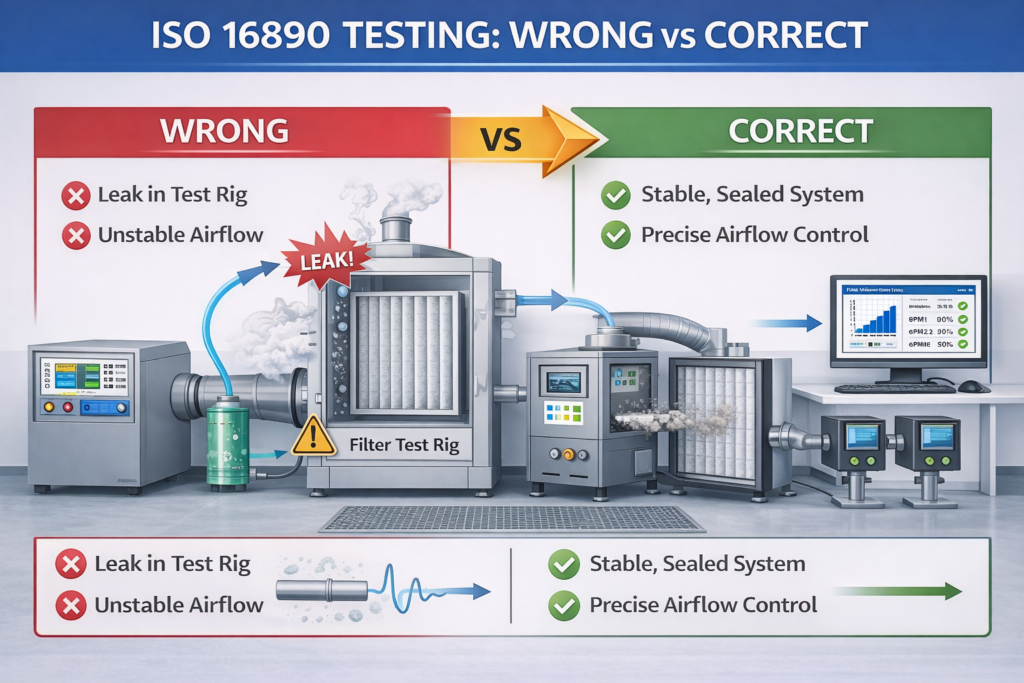
8. Why Accurate Testing Is Critical
Selecting the right filter depends on reliable data.
Without accurate testing:
- Efficiency may be overestimated
- Performance may not match real conditions
👉 This is why ISO 16890 testing is essential for both manufacturers and users.
9. Solução de teste recomendada
O Sistema de teste de filtro de ventilação geral SC-16890 from SCPUR ensures accurate evaluation of:
- PM1 / PM2,5 / Eficiência PM10
- Queda de pressão
- Performance after discharge and dust loading
Principais benefícios
- Resultados confiáveis e repetíveis
- Totalmente compatível com ISO 16890
- Supports product development and selection
👉 Helps manufacturers provide trustworthy data for customers.
10. Quick Selection Guide
| Aplicativo | Recommended Class |
|---|---|
| Office / Comercial | ePM2.5 |
| Hospital | ePM1 |
| Industrial | ePM10 / ePM2.5 |
| Residential | ePM2.5 |
11. Conclusão
Choosing the right air filter under ISO 16890 requires understanding:
✔ Application requirements
✔ Efficiency vs pressure drop
✔ Real-world performance
By making informed decisions, users can achieve:
- Better indoor air quality
- Lower energy consumption
- Longer system lifespan