Accurate testing is essential to ensure compliance with ISO 16890. For air filter manufacturers and laboratories, selecting the right test equipment directly impacts data reliability, product quality, and certification results.
En esta guía, we explain what ISO 16890 test equipment includes, key selection criteria, and how to choose the best system for your needs.
1. ¿Qué es ISO? 16890 Equipo de prueba?
ISO 16890 test equipment refers to a complete system designed to evaluate air filter performance under standardized conditions.
A typical system measures:
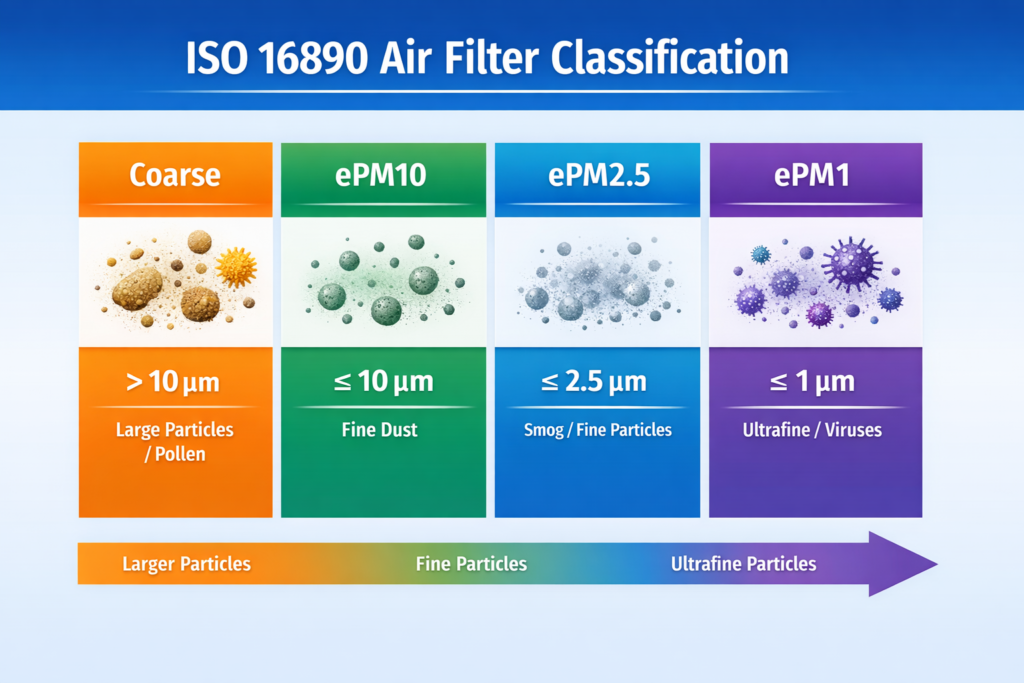
- PM1 / PM2.5 / PM10 filtration efficiency
- Caída de presión
- Capacidad de retención de polvo
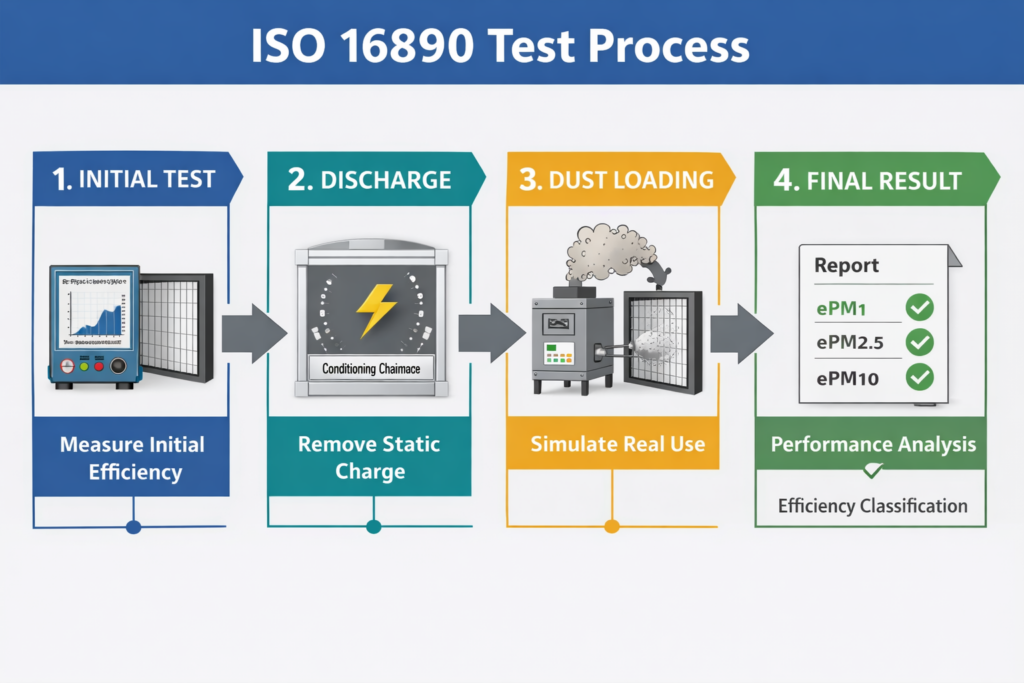
- Rendimiento después de la descarga y la carga.
👉 It is widely used in:
- Filter manufacturing
- Third-party laboratories
- R&D centers
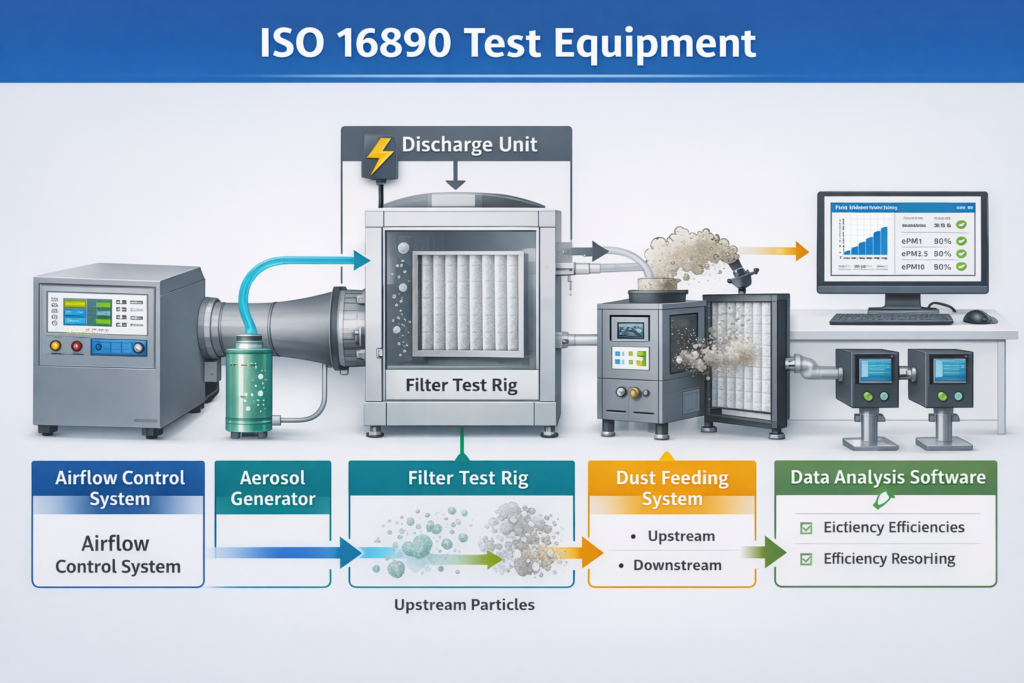
2. Core Components of a Test System
A complete ISO 16890 test rig includes several critical modules:
2.1 Airflow Control System
- Provides stable and adjustable airflow
- Ensures repeatable test conditions
2.2 Aerosol Generation System
- Generates test particles with controlled size distribution
2.3 Particle Measurement System
- Measures upstream and downstream particle concentration
- Calculates filtration efficiency
2.4 Dust Feeding System
- Simulates real operating conditions
- Enables loading tests
2.5 Descargar (Acondicionamiento) Unit
- Removes electrostatic effects
- Ensures realistic performance evaluation
2.6 Data Acquisition Software
- Controls test process
- Generates reports automatically
3. Key Factors When Choosing ISO 16890 Equipo de prueba
3.1 Measurement Accuracy
Accuracy is the most critical factor.
Look for systems with:
- High-precision particle counters
- Stable airflow control
- Low measurement uncertainty
3.2 System Stability
Unstable systems lead to inconsistent results.
Important factors:
- Flow uniformity
- Dust feeding consistency
- Environmental control
3.3 Automation Level
Manual systems increase the risk of human error.
Modern systems should offer:
- Automated testing procedures
- Real-time data monitoring
- Automatic report generation
3.4 Compliance with ISO 16890
Ensure the system fully meets:
- Test procedure requirements
- Discharge process
- Dust loading conditions
3.5 Expandability
A good system should support:
- Future upgrades
- Different filter sizes
- Additional testing requirements
4. Common Problems with Low-Quality Test Systems
Choosing the wrong equipment can lead to:
❌ Inaccurate efficiency results
❌ Poor repeatability
❌ Unstable airflow
❌ Non-compliance with standards
👉 These issues can directly affect product certification and customer trust.
5. Solución recomendada: Sistema de prueba SC-16890
For reliable and standard-compliant testing, el SC-16890 Sistema de prueba de filtro de ventilación general from SCPUR is a proven solution.
Ventajas clave
1. High Accuracy Measurement
- Precise PM1 / PM2.5 / PM10 efficiency testing
- Advanced particle measurement system
2. Control de flujo de aire estable
- Ensures repeatable and reliable results
3. Integrated Discharge System
- Fully compliant with ISO 16890 requisitos
4. Automated Testing Process
- Reduces human error
- Improves efficiency
5. User-Friendly Software
- Easy operation
- Automatic report generation
Aplicaciones típicas
- Air filter manufacturers
- Certification laboratories
- Research institutions
- HVAC system developers
6. How to Select the Right System for Your Needs
When choosing equipment, considerar:
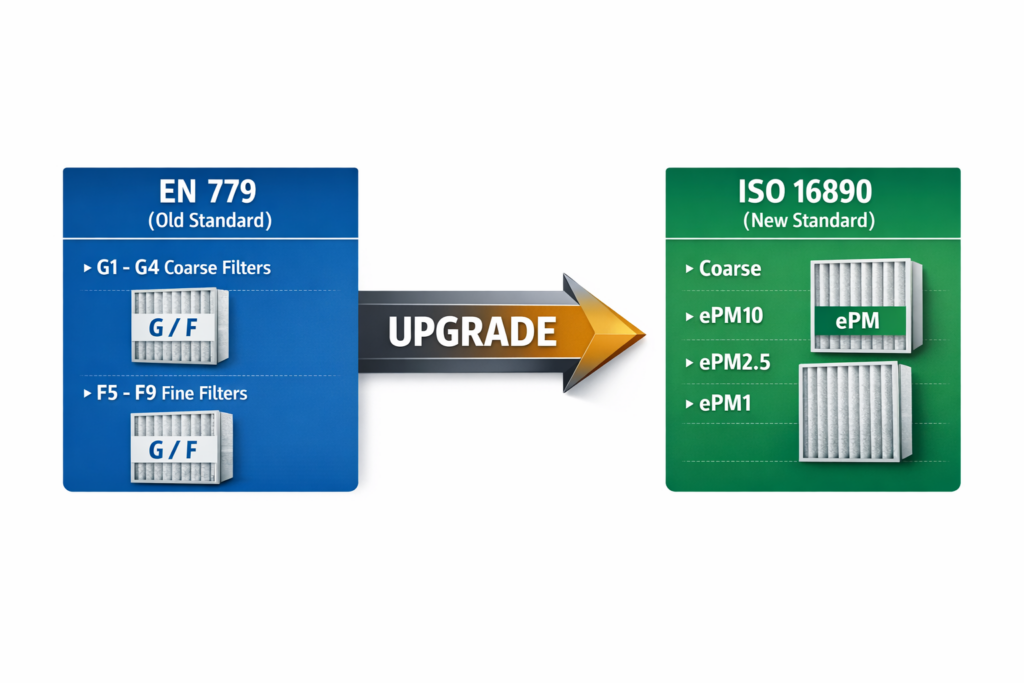
- Your target filter class (Grueso / ePM / alto rendimiento)
- Required accuracy level
- Testing volume (R&D vs production QC)
- Budget and long-term ROI
👉 A well-selected system improves both testing efficiency and product competitiveness.
7. Conclusión
ISO 16890 testing requires not only understanding the standard but also using the right equipment.
A high-quality test system ensures:
✔ Accurate and repeatable results
✔ Compliance with international standards
✔ Improved product quality