La eficiencia de filtración de los filtros HEPA es fundamental para mantener la calidad del aire en las salas blancas., laboratorios, y entornos industriales. Comprender los factores clave que influyen en el rendimiento del filtro ayuda a los fabricantes y usuarios a optimizar la eficiencia del sistema y extender la vida útil del filtro..
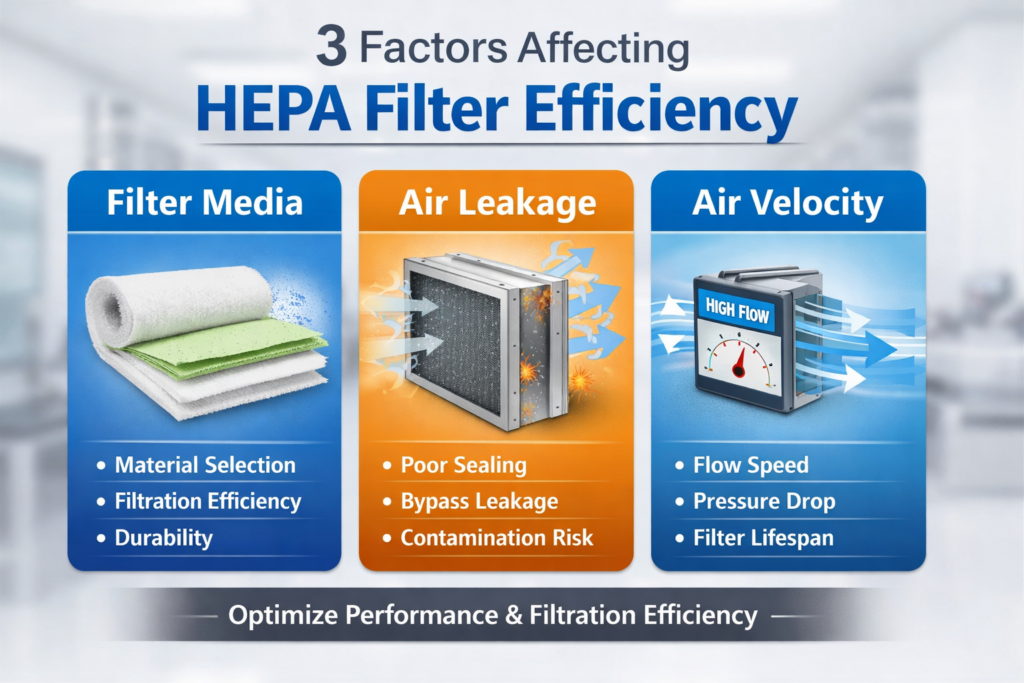
A continuación se detallan tres factores clave que afectan la eficiencia de filtración de los filtros HEPA..
1. Medios filtrantes (Selección de materiales)
El medio filtrante es el componente principal que determina el rendimiento de filtración de un filtro HEPA..
Diferentes materiales, como fibra de vidrio., PTFE, o fibras sintéticas: ofrecen distintos niveles de eficiencia de filtración, resistencia, y durabilidad. La selección del medio filtrante debe considerar:
- Temperatura de funcionamiento
- Características del polvo (tamaño de partícula, concentración, viscosidad)
- Condiciones del flujo de aire
- Eficiencia de filtración requerida
Los medios filtrantes de alta calidad deben tener:
- Alta eficiencia de filtración
- Baja resistencia al flujo de aire
- Buena permeabilidad al aire
- Fuerte resistencia mecánica
- Larga vida útil
La selección adecuada del material garantiza un rendimiento estable y reduce los costos de mantenimiento..
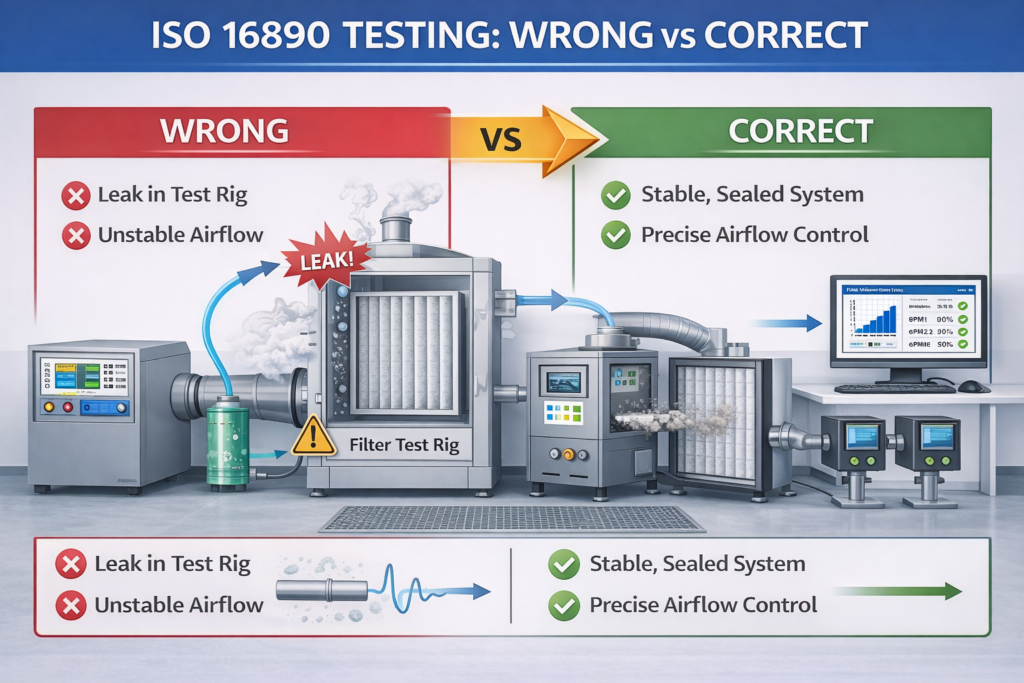
2. Fuga de aire (Rendimiento de sellado)
La fuga de aire es uno de los factores más críticos que afectan la eficiencia del filtro HEPA.
Incluso una pequeña cantidad de fuga puede permitir que el aire sin filtrar pase por alto el medio filtrante., reduciendo significativamente el rendimiento general del sistema. Para garantizar un sellado adecuado:
- Los marcos de los filtros deben diseñarse con alta rigidez.
- Las juntas de sellado y los diseños con filo de cuchillo deben instalarse correctamente
- La instalación debe garantizar conexiones herméticas.
Las fugas de aire pueden provocar:
- Eficiencia de filtración reducida
- Mayor resistencia del sistema.
- Riesgos de contaminación en entornos de salas blancas
Por lo tanto, El sellado y la instalación adecuados son esenciales para mantener la integridad del filtro HEPA..
3. Velocidad del aire de filtración
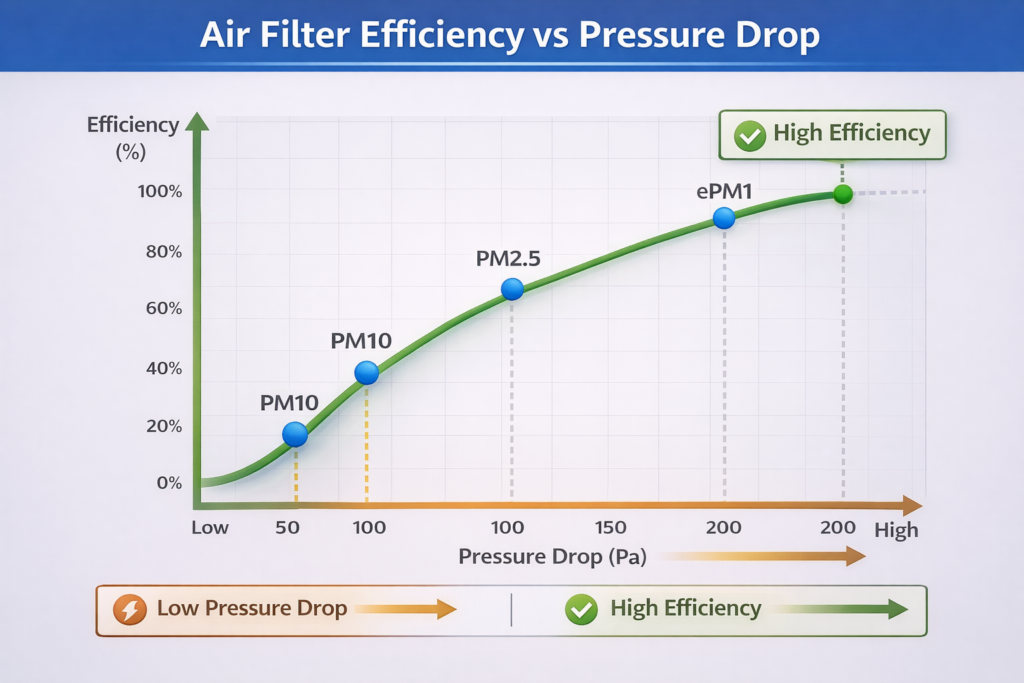
La velocidad del aire de filtración afecta directamente tanto a la eficiencia como a la resistencia..
Si la velocidad del aire es demasiado alta:
- La eficiencia de filtración puede disminuir
- La caída de presión aumenta
- La vida útil del filtro se reduce
Si la velocidad del aire se controla adecuadamente:
- El rendimiento de la filtración se mantiene estable
- Se optimiza el consumo de energía.
- La vida útil del filtro se extiende
La velocidad óptima del aire depende de:
- Tamaño de partícula y concentración.
- Temperatura y humedad
- Propiedades del polvo
Equilibrar el flujo de aire es clave para lograr un rendimiento de filtración eficiente.
Factores adicionales a considerar
Diseño del marco del filtro
Los marcos de los filtros HEPA suelen estar hechos de metal o plástico para garantizar resistencia y rigidez estructural.. El diseño adecuado del marco ayuda:
- Mantener el rendimiento del sellado
- Prevenir fugas de derivación
- Apoyar la operación estable
Diferentes diseños, como brida simple o brida doble, Puede adaptarse a diversos requisitos de instalación..
Espesor y estructura del filtro
El espesor del filtro afecta la resistencia al flujo de aire y el área de filtración.:
- Filtros más gruesos → mayor área de filtración → menor velocidad del aire → menor resistencia
- Filtros más delgados → mayor resistencia bajo el mismo flujo de aire
Entorno operativo
Las condiciones ambientales también juegan un papel importante.:
- Temperatura y humedad
- Gases corrosivos
- Requisitos especiales de aplicación
Para entornos exigentes, Es posible que se requieran materiales y diseños especializados..
Conclusión
La eficiencia de filtración de los filtros HEPA está influenciada por múltiples factores., incluyendo medios filtrantes, fuga de aire, y velocidad de filtración. Optimizando estos parámetros y garantizando un diseño adecuado del sistema, los usuarios pueden lograr un rendimiento confiable y extender la vida útil del filtro.
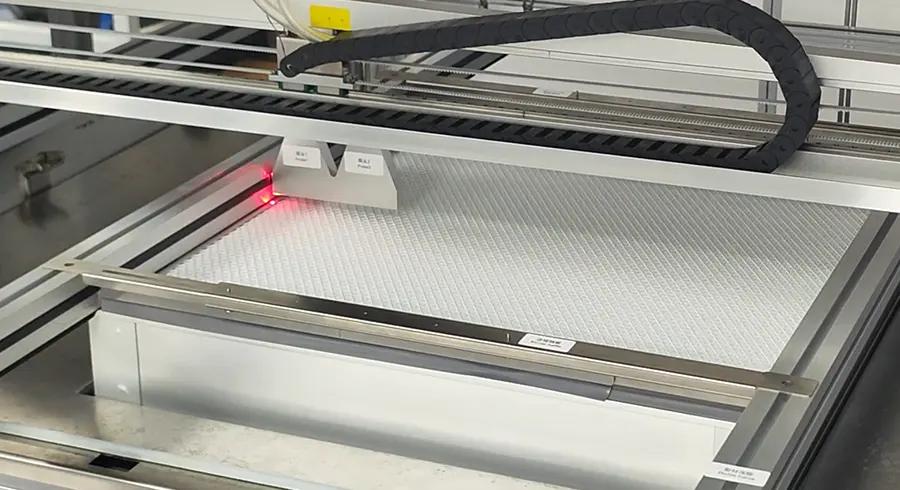
Métodos de prueba precisos, de acuerdo con normas como EN 1822, son esenciales para verificar el rendimiento del filtro y garantizar el control de calidad..