Introduction
In modern air filtration, performance evaluation is no longer just about capturing large particles. With increasing concerns over fine particulate pollution, standards must reflect real-world conditions.
ISO 16890 has become a global benchmark for evaluating air filter performance in HVAC systems. Jedoch, understanding how it works—and the essential role of testing equipment—is critical for manufacturers and end users alike.
What Is ISO 16890?
ISO 16890 is an international standard that classifies air filters based on their efficiency in capturing particulate matter (PM) of different sizes.
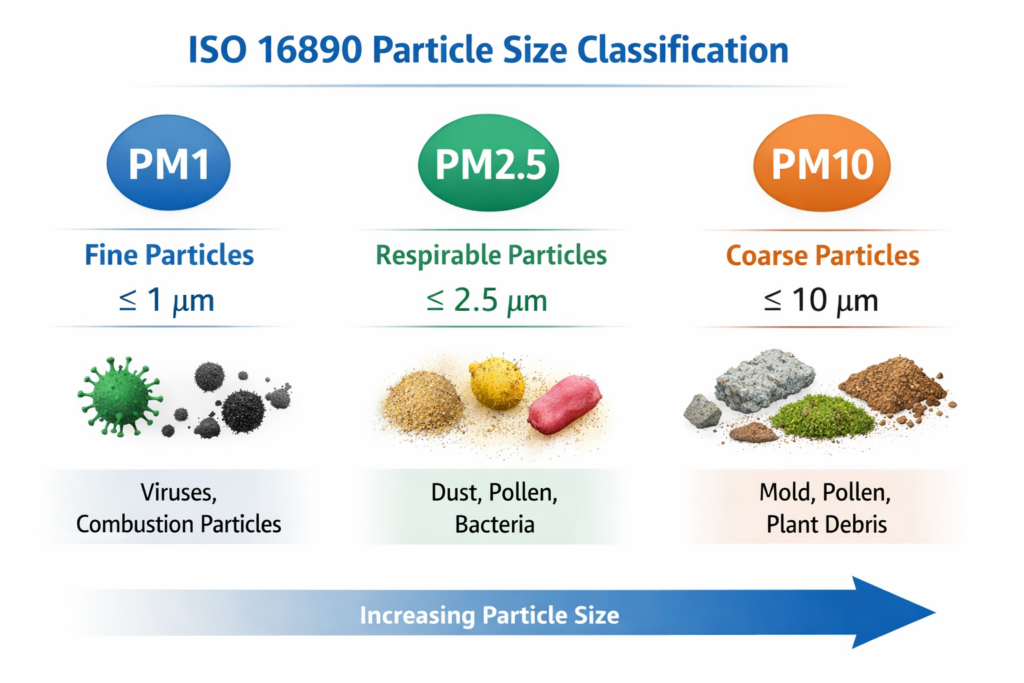
Unlike older standards, it evaluates filters across three key particle ranges:
- PM1 (fine particles ≤1 μm)
- PM2,5 (respirable particles ≤2.5 μm)
- PM10 (coarse particles ≤10 μm)
This approach reflects real environmental conditions and aligns filtration performance with actual health impacts.
👉 Instead of a single efficiency value, filters are now classified as:
- ePM1
- ePM2.5
- ePM10
This provides a more realistic and application-oriented evaluation system.
Why ISO 16890 Matters
The transition to ISO 16890 represents a major shift in the filtration industry:
- ✔ Focus on real-world air quality instead of lab-only metrics
- ✔ Better alignment with global environmental and health standards
- ✔ Improved comparability between different filter products
For HVAC systems, this means more accurate selection of filters based on actual air pollution conditions.
The Crucial Role of Testing Equipment
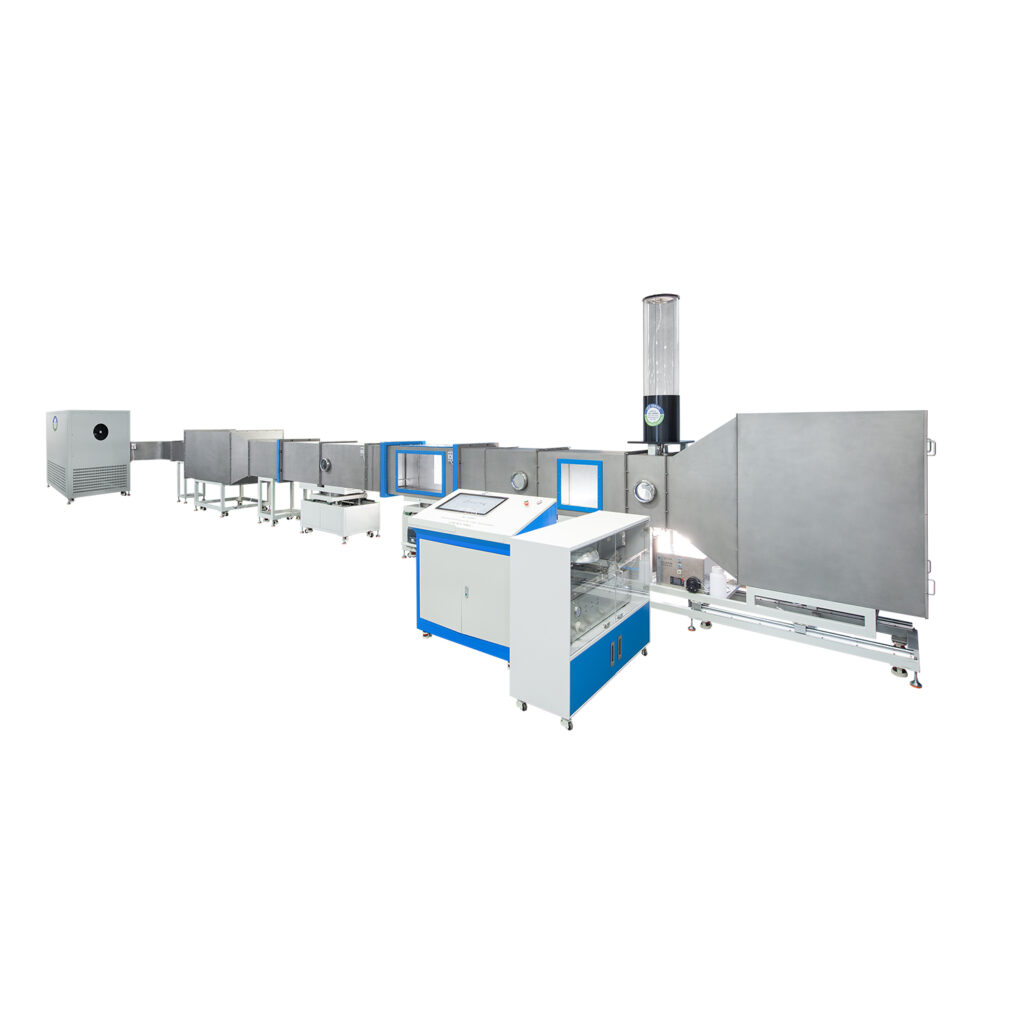
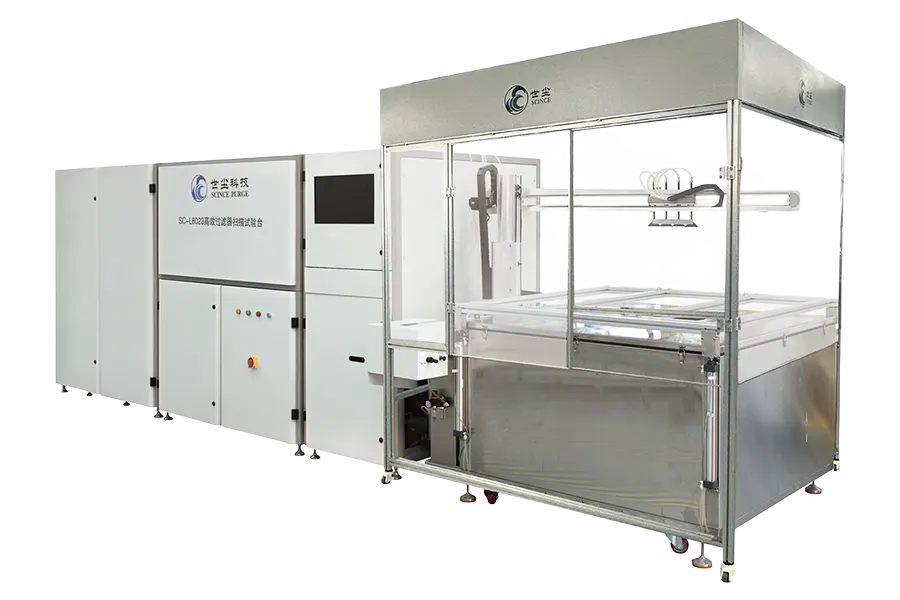
Accurate classification under ISO 16890 depends entirely on high-performance testing equipment.
These systems are responsible for:
- Generating controlled aerosol particles
- Measuring filtration efficiency across particle sizes
- Monitoring airflow, Druckabfall, and dust loading
- Ensuring repeatability and compliance with standard procedures
Without precise testing systems, ISO 16890 classification would lack consistency and credibility.
How Testing Equipment Ensures Accuracy
Modern filter testing systems provide:
1. High-Precision Measurement
Advanced particle counters and sensors ensure accurate detection of PM1, PM2,5, and PM10 efficiency.
2. Stable Airflow Control
Uniform airflow is essential to simulate real operating conditions and ensure reliable results.
3. Automated Data Collection
Automation reduces human error and improves testing efficiency.
4. Standardized Procedures
Testing equipment ensures every filter is evaluated under identical conditions, enabling fair comparison.
Quality Assurance and Product Development
Testing equipment is not only used for certification but also plays a key role in:
- Quality control during production
- Identifying performance deviations
- Supporting R&D for new filter materials
- Optimizing filter structure and efficiency
For manufacturers, this means better product consistency and faster innovation cycles.
Environmental and Health Impact
Air filtration directly impacts both indoor air quality and broader environmental health.
By ensuring filters meet ISO 16890 Anforderungen, testing equipment helps:
- Reduce exposure to harmful fine particles
- Improve air quality in buildings and industrial environments
- Support global efforts to combat air pollution
This is particularly important in industries such as HVAC, cleanrooms, and new energy manufacturing.
Abschluss
ISO 16890 has redefined how air filters are evaluated, shifting the focus toward real-world performance and health relevance.
Jedoch, the reliability of this standard depends on one critical factor:
👉 Accurate and advanced testing equipment
From ensuring compliance to driving innovation, testing systems are essential for delivering high-quality air filtration solutions.
👉 Looking for ISO 16890 compliant testing solutions? Contact SCPUR for expert support.