Air filtration systems typically use multiple stages of filters to ensure effective removal of particles. Among them, pre filters, fine filters, and HEPA filters play different roles in improving air quality.
Understanding the differences between these filters is essential for selecting the right filtration system and ensuring optimal performance.
1. What Are Pre Filters?
Pre filters are the first stage of air filtration systems, designed to capture large particles such as dust, hair, and lint.
Key Features:
- Capture large particles (>5 μm)
- Protect downstream filters
- Low cost and easy replacement
Typical Applications:
- HVAC systems
- Industrial ventilation
- Cleanroom air handling units (AHU)
👉 Their main function is to extend the lifespan of fine and HEPA filters.
2. What Are Fine Filters?
Fine filters (also known as medium filters) are the second stage of filtration, designed to remove smaller particles that pass through pre filters.
Key Features:
- Capture particles in the range of 1–5 μm
- Higher efficiency than pre filters
- Moderate resistance
Typical Applications:
- Commercial buildings
- Hospitals
- Cleanroom pre-filtration
👉 Fine filters act as a bridge between pre filters and HEPA filters.
3. What Are HEPA Filters?
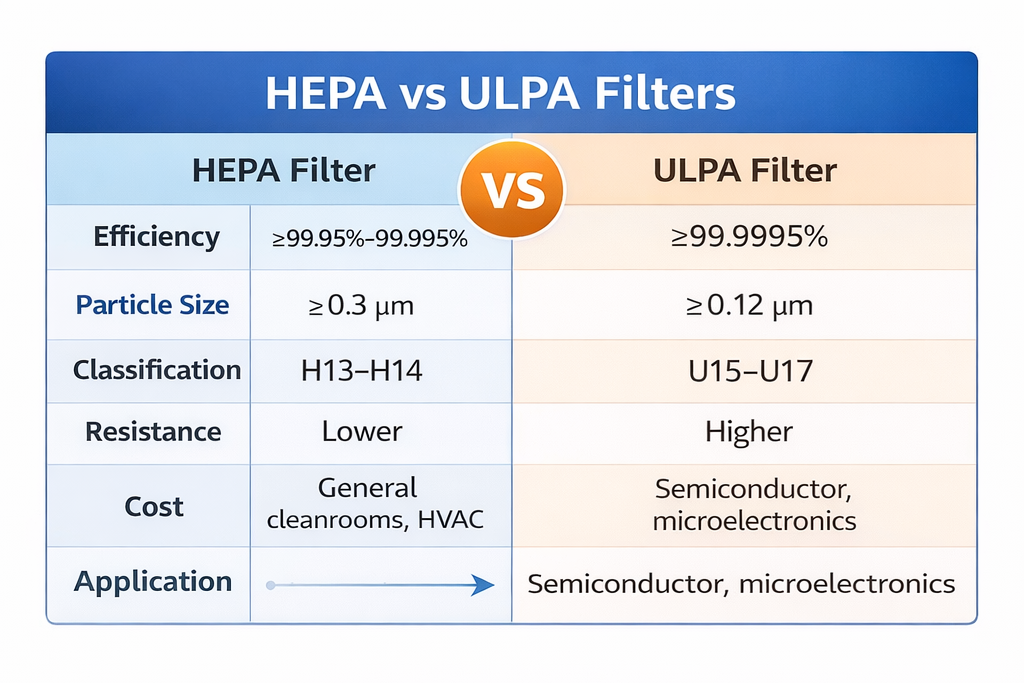
HEPA filters (High-Efficiency Particulate Air filters) are the final and most critical stage of filtration.
They are designed to remove extremely small particles, including bacteria and fine aerosols.
Key Features:
- Capture ≥99.97% of particles at 0.3 μm
- High filtration efficiency
- Used in critical environments
Typical Applications:
- Pharmaceutical cleanrooms
- Semiconductor manufacturing
- Hospitals and laboratories
HEPA filters are tested according to standards such as EN 1822 to ensure performance and reliability.
👉 Learn more about how HEPA filters are tested in our guide:
HEPA Filter Leak Detection Methods →
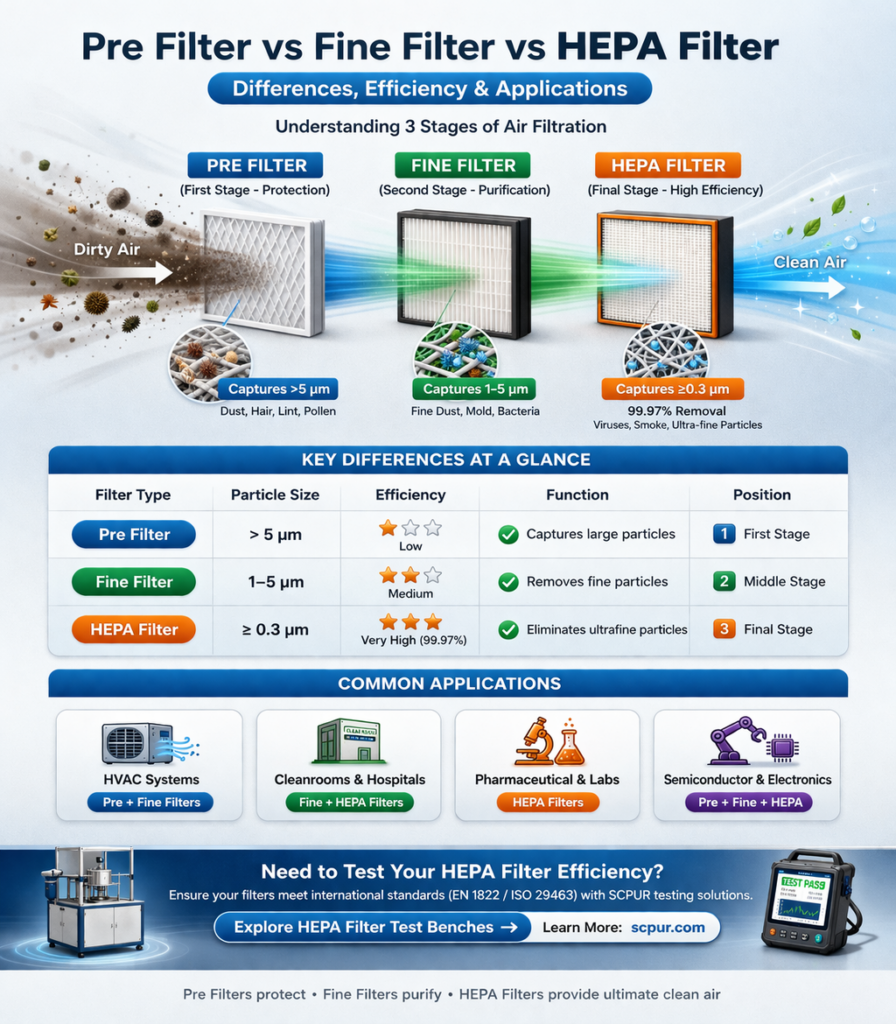
4. Key Differences at a Glance
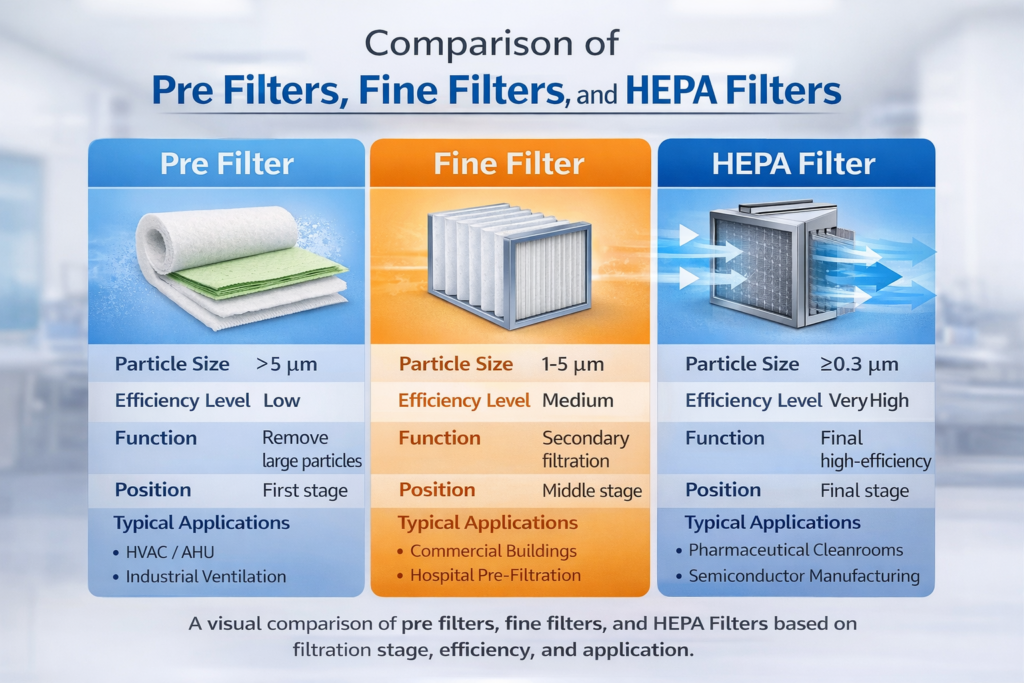
To better understand the differences, see the comparison below:
| Filter Type | Particle Size | Efficiency Level | Function | Position |
|---|---|---|---|---|
| Pre Filter | >5 μm | Low | Remove large particles | First stage |
| Fine Filter | 1–5 μm | Medium | Secondary filtration | Middle stage |
| HEPA Filter | ≥0.3 μm | Very high | Final high-efficiency filter | Final stage |
5. Why Multi-Stage Filtration Matters
Using pre, fine, and HEPA filters together provides several advantages:
- Improves overall filtration efficiency
- Extends HEPA filter lifespan
- Reduces system maintenance cost
- Ensures stable air quality
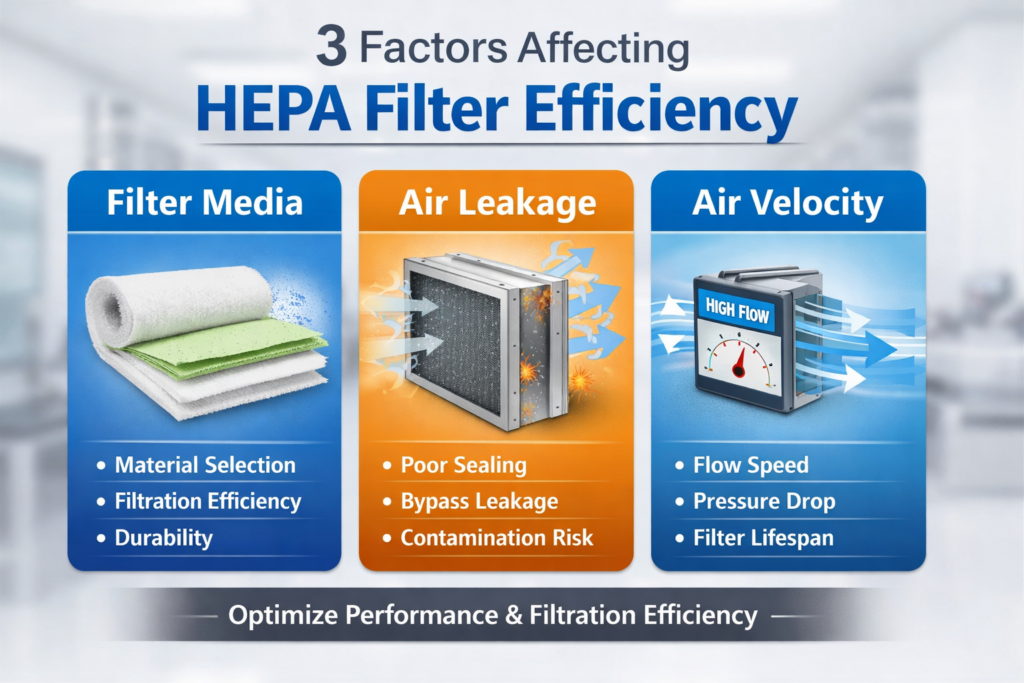
Without proper pre-filtration, HEPA filters may clog quickly, leading to increased resistance and reduced performance.
6. How to Choose the Right Filter System
When selecting filters, consider:
- Application environment (cleanroom, HVAC, industrial)
- Required air cleanliness level
- Operating cost and maintenance
- Filter testing and certification
For critical applications, it is essential to verify filter performance using professional testing systems.
Conclusion
Pre filters, fine filters, and HEPA filters each play a unique role in air filtration systems. Understanding their differences helps optimize system design, improve air quality, and reduce operational costs.
A well-designed multi-stage filtration system ensures both efficiency and long-term reliability.
Looking for reliable HEPA filter testing solutions?
👉 Explore our testing systems:
HEPA Filter Test Bench SC-L8023 →