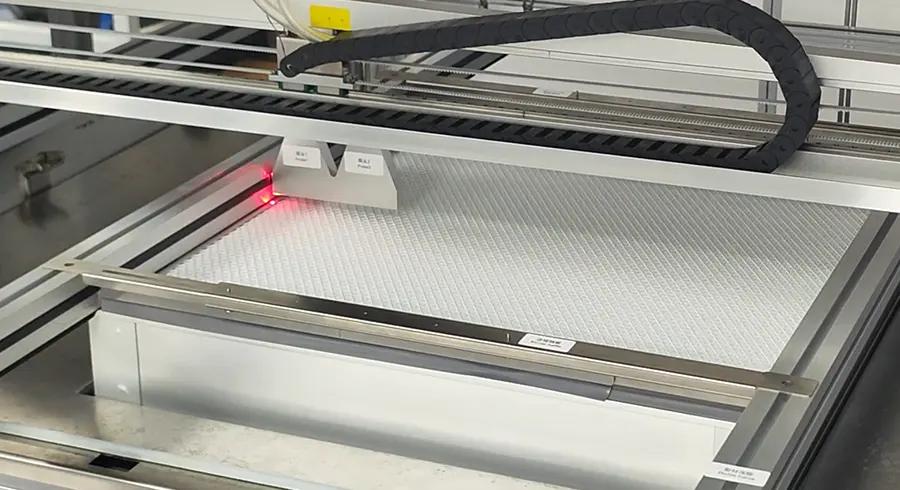
В современных приложениях фильтрации воздуха, пользователей все больше беспокоит, насколько хорошо фильтры удаляют частицы размером PM2,5 и PM10.. ИСО 16890 в настоящее время является ведущим международным стандартом для оценки эффективности воздушных фильтров для общей вентиляции..
В этой статье дается четкое объяснение того, как ISO 16890 определяет и измеряет ePM1, еPM2.5, еPM10, и эффективность грубой фильтрации, а также ключевые темы, такие как типы аэрозолей, классификация частиц по размеру, обработка данных, и требования к конструкции оборудования.
Зачем переходить с EN779 на ISO 16890?
ИСО 16890 был разработан взамен стандарта EN779 с целью создания более реалистичного и согласованного на глобальном уровне метода испытаний воздушных фильтров.. Он лучше отражает реальную производительность за счет:
Измерение эффективности в диапазоне размеров частиц (не просто 0.4 мкм)
Предоставление классификации на основе PM1, ТЧ2,5, и массовый КПД PM10
Предоставление результатов, которые соответствуют фактическим показателям качества воздуха в окружающей среде.
Зачем вводить нейтрализацию IPA?
Многие современные фильтры используют электростатический заряд для повышения начальной эффективности.. Однако, эти эффекты могут быстро ухудшиться при реальном использовании из-за влажности., старение, или загрузка пыли. ИСО 16890 представляет обработка паром IPA устранить это обвинение и определить минимальная эффективность— наихудшая производительность, основанная исключительно на механической фильтрации..
Путем усреднения начальной и минимальной эффективности, классификация становится:
Более реалистичная долгосрочная производительность
Более последовательный и сопоставимый
Справедливее для разных типов медиа (электростатический против. механический)
Типы аэрозолей: ДЭХС и KCl
Для тестирования во всем диапазоне соответствующих размеров частиц, ИСО 16890 рекомендует использовать:
| Тип аэрозоля | Диапазон размеров частиц (мм) | Цель |
| ДЭХС | 0.3 – 1.0 | Мелкие частицы (еПМ1) |
| КСl | 1.0 – 10.0 | Частицы среднего и крупного размера (еPM2.5, еPM10) |
Такой подход с двумя источниками обеспечивает покрытие всего диапазона 0,3–10 мкм..
Распределение частиц по размерам и требования к приборам
ИСО 16890 тест определяет 13 бункеры по размеру частиц из 0.3 к 10 мкм. Фильтры оцениваются по тому, насколько эффективно они удаляют частицы в этих контейнерах., с взвешенной массовой эффективностью, рассчитанной для каждого уровня (еПМ1, еPM2.5, еPM10).
| Бин | Диапазон размеров (мкм) |
| 1 | 0.30 – 0.40 |
| 2 | 0.40 – 0.55 |
| 3 | 0.55 – 0.70 |
| 4 | 0.70 – 1.00 |
| 5 | 1.00 – 1.30 |
| 6 | 1.30 – 1.60 |
| 7 | 1.60 – 2.20 |
| 8 | 2.20 – 3.00 |
| 9 | 3.00 – 4.00 |
| 10 | 4.00 – 5.50 |
| 11 | 5.50 – 7.00 |
| 12 | 7.00 – 8.50 |
| 13 | 8.50 – 10.00 |
Разбивка диапазона эффективности:
еПМ1: взвешивается по ячейкам 1–4 (0.3–1,0 мкм)
еPM2.5: бункеры 1–7 (0.3–2,5 мкм)
еPM10: все бункеры 1–13 (0.3–10,0 мкм) Инструменты должны:
Обнаружение частиц размером 0,3–10 мкм
Разрешите не менее 12–13 каналов размера, как определено
Подсчитайте ≥500 частиц на бункер, чтобы обеспечить статистическую точность.
Рекомендуемые инструменты включают оптические счетчики частиц. (ОПК), аэродинамические калибраторы частиц (АПС), и передовые многоканальные системы.
Метод расчета ePMx
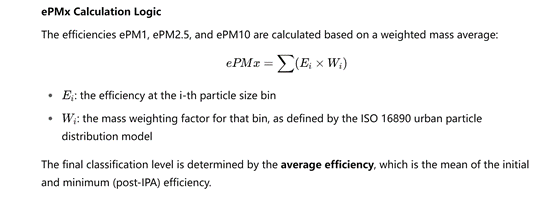
Эффективность ePM1, еPM2.5, и ePM10 рассчитываются на основе средневзвешенного массового значения.:
Эя: эффективность в i-м бункере по размеру частиц.
Wi: весовой коэффициент массы для этого контейнера, как определено ISO 16890 модель распределения частиц в городе.

Итоговый уровень классификации определяется средней эффективностью, что является средним значением начального и минимального (после LPA) эффективность.
Лечение ИПА: Контроль электростатических эффектов
Фильтры, работающие на электростатическом заряде, со временем могут потерять эффективность.. Чтобы обеспечить последовательную и справедливую классификацию, ИСО 16890 требует, чтобы фильтр подвергся воздействию паров IPA перед испытанием, чтобы устранить этот заряд.. Это дает минимальная эффективность, отражает наихудшие механические характеристики.
Затем среднее значение начальной и минимальной эффективности используется для назначения ePM1., еPM2.5, или уровни классификации ePM10.
Фильтры грубой очистки ISO: Когда ePM10 < 50%
Если эффективность фильтра ePM10 меньше 50%, его нельзя классифицировать как ePM1–10.. Вместо, это проверено на
гравиметрический (на основе веса) эффективность:
- Загрузка пылью ISO A2
- Измерьте массу до и после загрузки
- Определять:
![]() Начальная гравиметрическая эффективность
Начальная гравиметрическая эффективность
Пылеудерживающая способность до достижения окончательного сопротивления
Что включает в себя окончательный отчет?
Исходный, минимум, и средняя эффективность
классификация ePM (еПМ1, еPM2.5, еPM10)
Диаграмма распределения эффективности размера частиц
Кривая загрузки пыли и динамика перепада давления
Гравиметрические результаты для грубой классификации
Ключевые характеристики, необходимые для испытательного оборудования
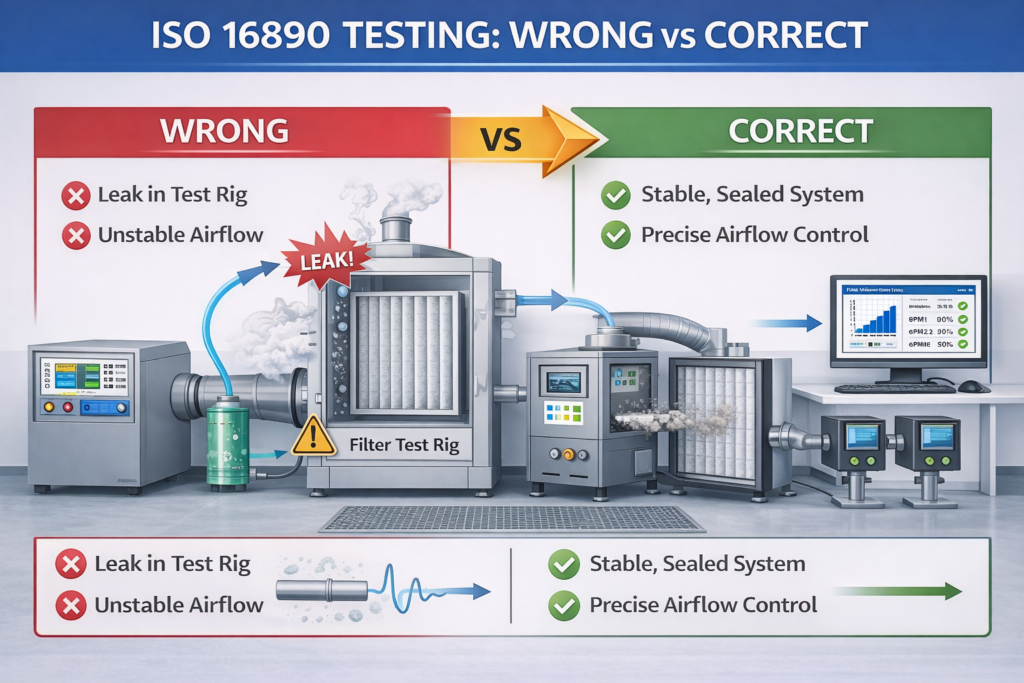
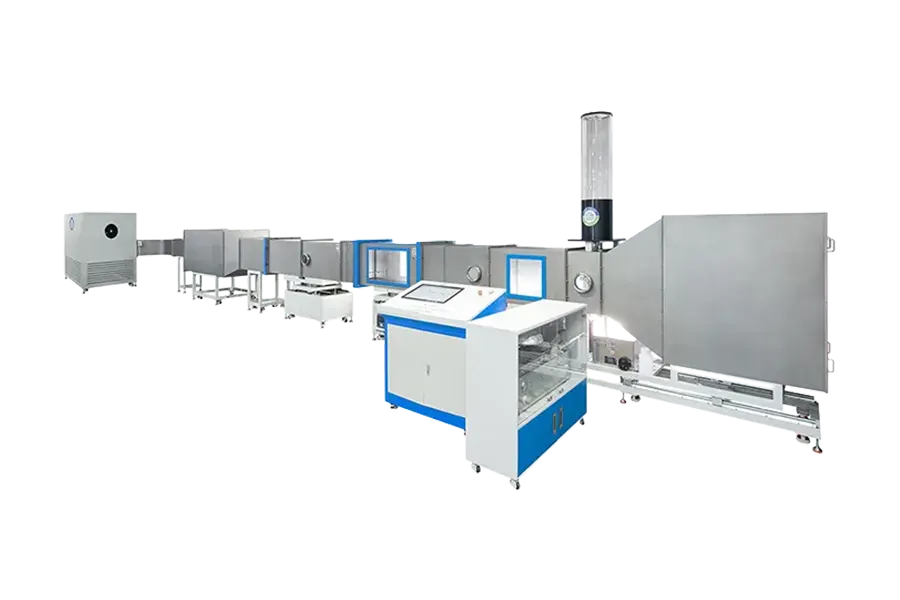
Соответствовать ISO 16890, тестовая система должна включать следующие основные модули:
Система воздуховодов и вентиляторов: Обеспечивает стабильный и регулируемый поток воздуха для испытаний. (обычно 500–4500 м³/ч) при сохранении одинаковой скорости по всей поверхности фильтра.
Генераторы масляных и солевых аэрозолей: Способен генерировать стабильный выход частиц как для DEHS, так и для KCl.. Для крупных частиц (например, 10 мкм KCl), система должна производить ≥500 частиц в минуту на канал каждого размера.
Система загрузки пыли: Поддерживает непрерывное впрыскивание тестовой пыли ISO A2., со встроенной системой взвешивания, которая автоматически улавливает и записывает массу пыли до и после загрузки.
Счетчик частиц: Должен поддерживать отбор проб в диапазоне 0,3–10 мкм с 12 или более контейнеров определенного размера, чтобы обеспечить соответствие разрешения стандартам классификации ISO..
Система расчета и контроля данных: Координирует работу вентилятора и генератора., ссылки на счетчики частиц и системы разбавления, и автоматически выполняет переключение восходящего/нисходящего потока, расчет эффективности, определение средней эффективности, и формирование отчетов.
Заключение
ИСО 16890 приближает тестирование воздушного фильтра к реальным ожиданиям производительности. Понимая логику его классификации, процедуры испытаний, и требования к приборам, производители могут разрабатывать более эффективные фильтры, а пользователи могут лучше доверять маркировке производительности, на которую они полагаются..