Understanding how ИСО 16890 testing works is essential for air filter manufacturers, лаборатории, and HVAC engineers.
В отличие от старых стандартов, ИСО 16890 introduces a multi-stage testing method designed to reflect real-world operating conditions and provide reliable performance data.
In this guide, we break down the ISO 16890 test method step by step.
1. Overview of ISO 16890 Тестирование
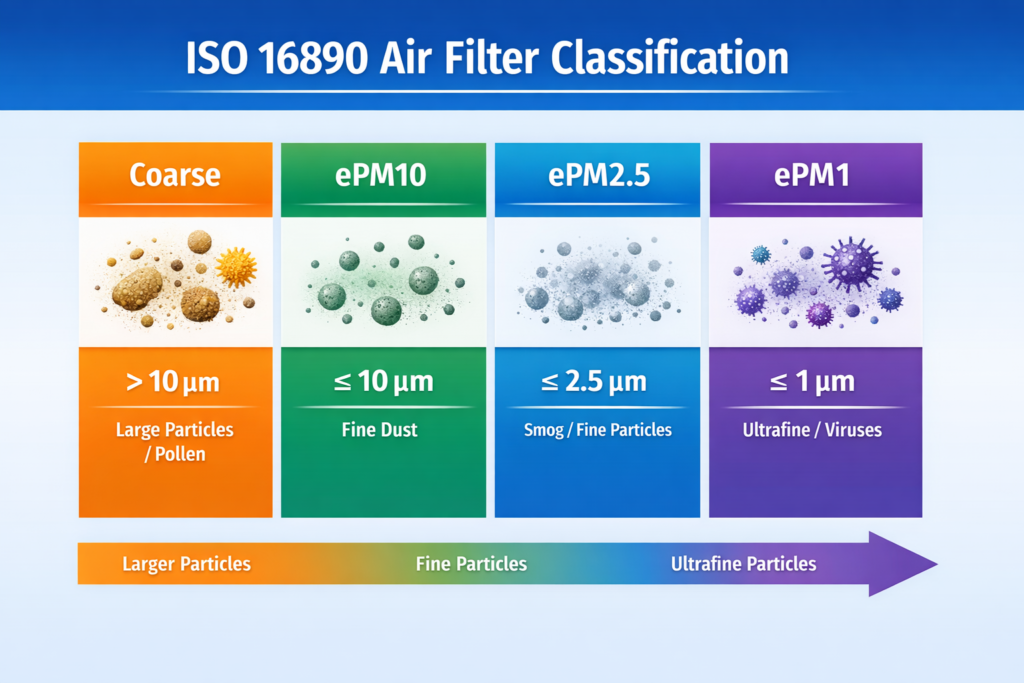
ИСО 16890 test evaluates filter performance based on its ability to remove particulate matter (ПМ) across different size ranges:
- ПМ1
- ТЧ2,5
- ТЧ10
The final classification (еПМ1, еPM2.5, и т. д.) is based on average efficiency after conditioning and dust loading.
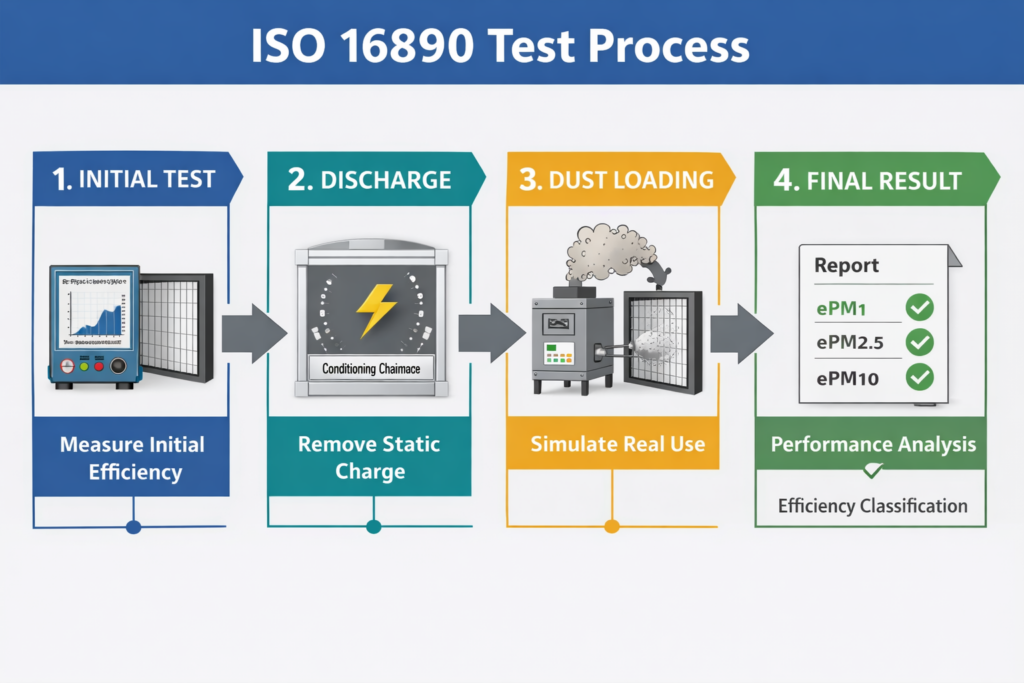
2. Step-by-Step ISO 16890 Test Process
Шаг 1: Initial Efficiency Measurement
The test begins by measuring the filter’s initial fractional efficiency across a range of particle sizes.
- Uses particle counters
- Measures efficiency vs particle size curve
- Identifies baseline performance
👉 This step reflects the filter’s performance in its “new” condition.
Шаг 2: Увольнять (Conditioning Process)
One of the most important differences in ISO 16890 is the процесс разрядки, which removes electrostatic effects from the filter.
Why this matters:
- Many filters rely on electrostatic attraction
- Performance may drop over time in real use
👉 Discharge ensures the test reflects real-life performance, not just initial efficiency.
Шаг 3: Dust Loading Test
The filter is then exposed to standardized test dust to simulate real operating conditions.
During this process:
- Dust is continuously fed into the airflow
- Pressure drop increases over time
- Efficiency changes dynamically
👉 This step evaluates filter durability and stability.
Шаг 4: Final Efficiency Calculation
After completing the loading process, the system calculates:
- Average PM1 efficiency
- Average PM2.5 efficiency
- Average PM10 efficiency
These values determine the final classification:
- еПМ1
- еPM2.5
- еPM10
- Грубый
3. Key Parameters Measured
ИСО 16890 testing focuses on several critical parameters:
Эффективность фильтрации
Measured across multiple particle sizes
Pressure Drop
Indicates energy consumption impact
Dust Holding Capacity
Determines filter lifespan
Efficiency Stability
Performance after discharge and loading
4. Почему ИСО 16890 Testing Is More Realistic
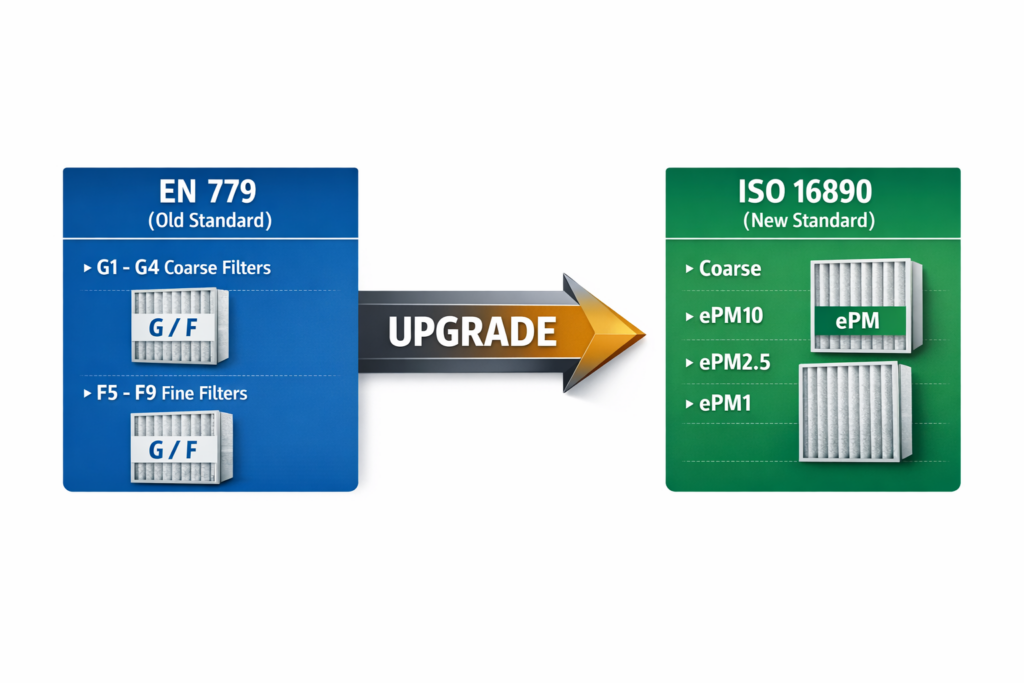
Compared to older standards, ИСО 16890 обеспечивает:
✔ Real particle size evaluation (PM-based)
✔ Simulation of filter aging (dust loading)
✔ Removal of electrostatic bias (discharge)
👉 This results in more accurate and reliable performance data.
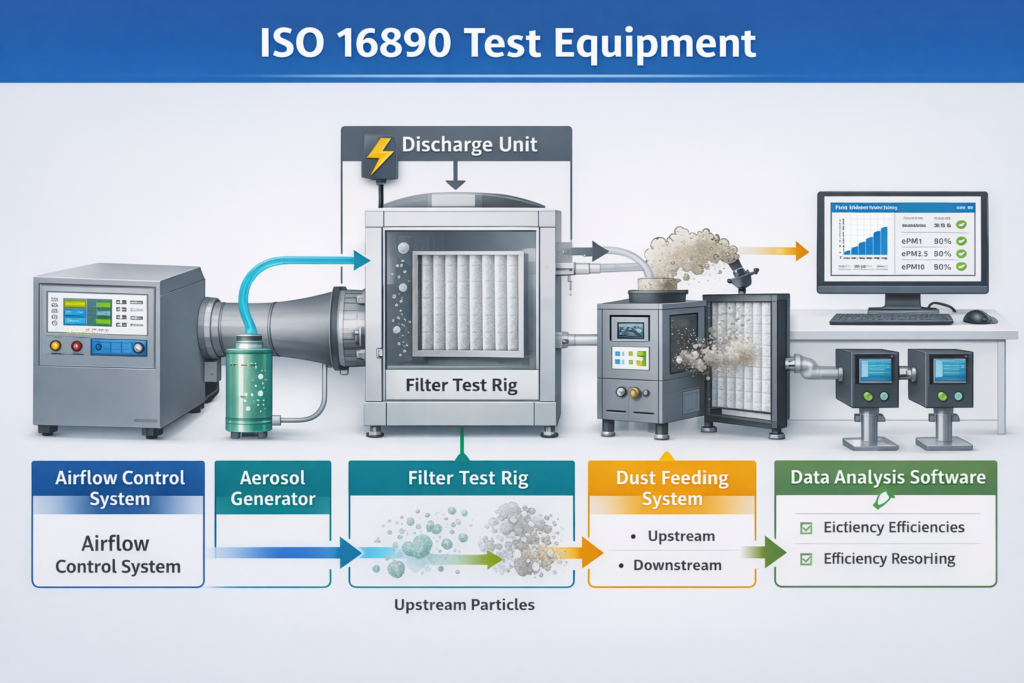
5. Test System Requirements
To perform ISO 16890 testing accurately, a complete test rig must include:
- Stable airflow control system
- Aerosol generation system
- Particle size measurement instruments
- Dust feeding unit
- Кондиционирование (discharge) module
⚠️ Any instability in airflow or particle measurement will directly affect test accuracy.
6. Common Challenges in ISO 16890 Тестирование
In practice, many laboratories face issues such as:
- Unstable airflow control
- Inaccurate particle size measurement
- Poor repeatability
- Inconsistent dust feeding
👉 These problems can lead to unreliable classification results.
7. Рекомендуемое решение: SC-16890 Test System
To address these challenges, professional testing equipment is essential.
The SC-16890 Система тестирования фильтров общей вентиляции from SCPUR is specifically designed for ISO 16890 согласие.
Ключевые преимущества
- Precise airflow control for stable test conditions
- Точный PM1 / ТЧ2,5 / PM10 measurement
- Integrated discharge (кондиционирование) system
- Automated dust loading process
- High repeatability and data reliability
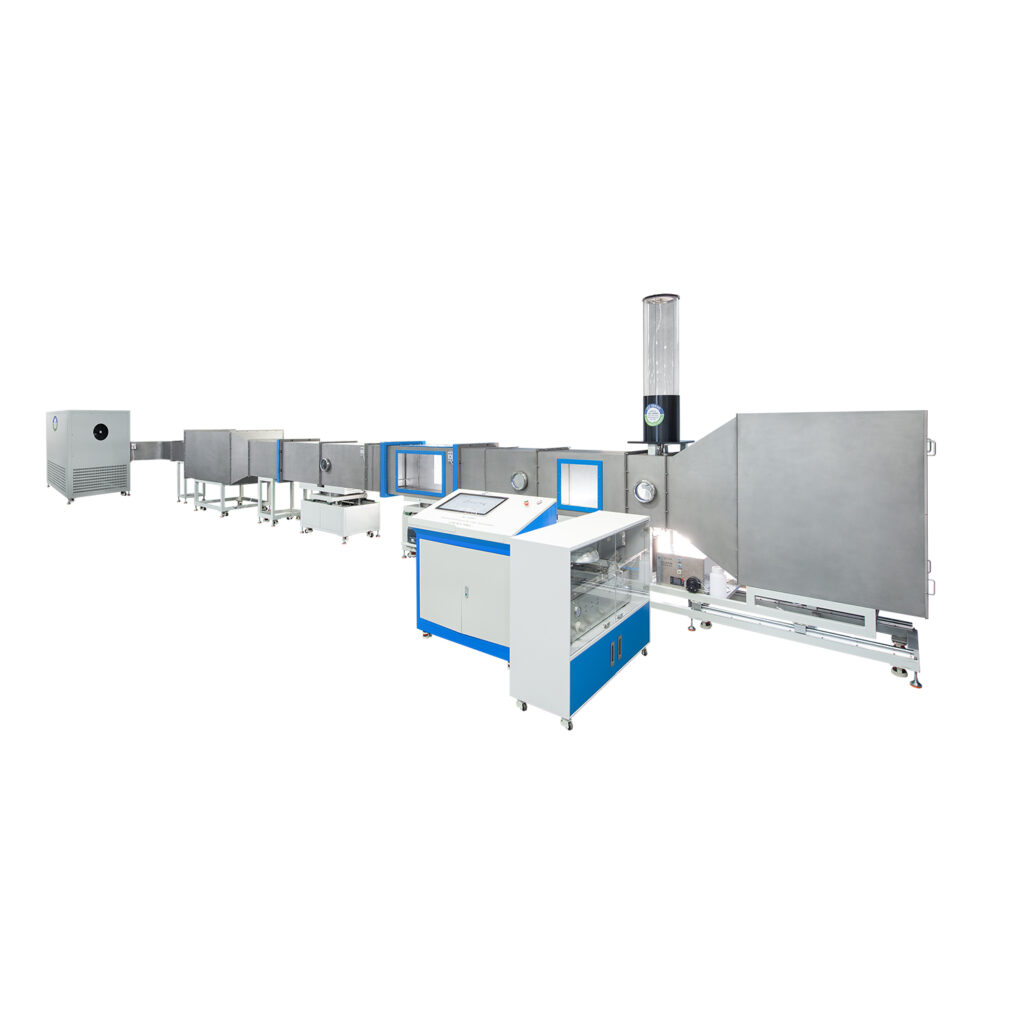
👉 This ensures consistent and standard-compliant results for both R&D and quality control.
8. Practical Applications
ИСО 16890 test systems are widely used in:
- Air filter manufacturing
- Third-party testing laboratories
- Research institutes
- HVAC system development
9. Заключение
ИСО 16890 test method represents a significant advancement in air filter evaluation by combining:
- Real particle measurement
- Filter aging simulation
- Standardized classification
To achieve accurate and repeatable results, selecting the right test system is critical.