Introduction
In high-efficiency air filtration systems, two terms are frequently mentioned: HEPA и ГНЕВ фильтры. Both are designed to capture extremely fine particles, but they differ significantly in performance, application, and testing requirements.
Understanding the differences between HEPA filter and ULPA filter is essential for selecting the right filtration solution for your application.
What Is a HEPA Filter?
A HEPA (High-Efficiency Particulate Air) filter is designed to remove at least:
- 99.97% of particles ≥ 0.3 мкм
According to ISO 29463 and EN standards, HEPA filters are typically classified from:
- H13 (≥99.95%)
- H14 (≥99.995%)
Key Features of HEPA Filters:
- High efficiency for most industrial and commercial applications
- Widely used in HVAC systems and cleanrooms
- Balanced performance between efficiency and airflow resistance
What Is a ULPA Filter?
A ГНЕВ (Ultra-Low Penetration Air) filter offers even higher filtration efficiency:
- ≥99.9995% for particles ≥ 0.12 мкм
ULPA filters are classified as:
- U15, U16, U17
Key Features of ULPA Filters:
- Extremely high particle removal efficiency
- Designed for ultra-clean environments
- Higher airflow resistance compared to HEPA
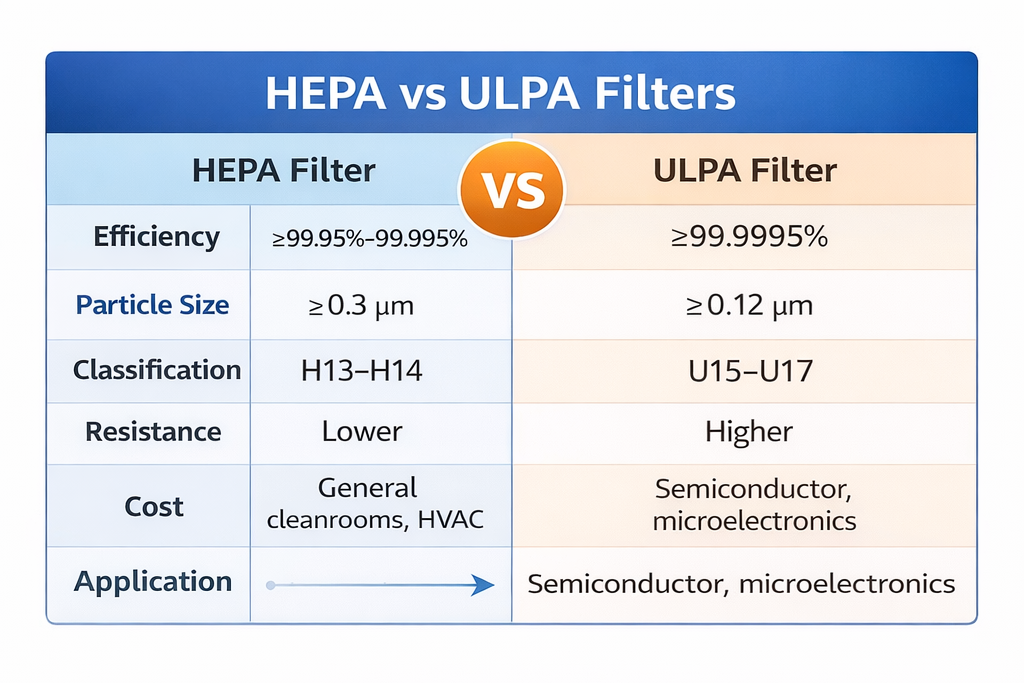
HEPA vs ULPA: Key Differences
| Feature | HEPA Filter | ULPA Filter |
|---|---|---|
| Эффективность | ≥99.95%–99.995% | ≥99.9995% |
| Particle Size | 0.3 мкм | 0.12 мкм |
| Classification | Н13–Н14 | U15–U17 |
| Resistance | Lower | Higher |
| Cost | Lower | Higher |
| Приложение | General cleanrooms, ОВиК | Полупроводник, microelectronics |
Приложения: When to Use HEPA or ULPA
HEPA Filters Are Suitable For:
- HVAC systems
- Pharmaceutical cleanrooms
- Hospital environments
- General industrial filtration
ULPA Filters Are Required For:
- Semiconductor manufacturing
- Microelectronics production
- Nanotechnology environments
- Ultra-clean laboratories
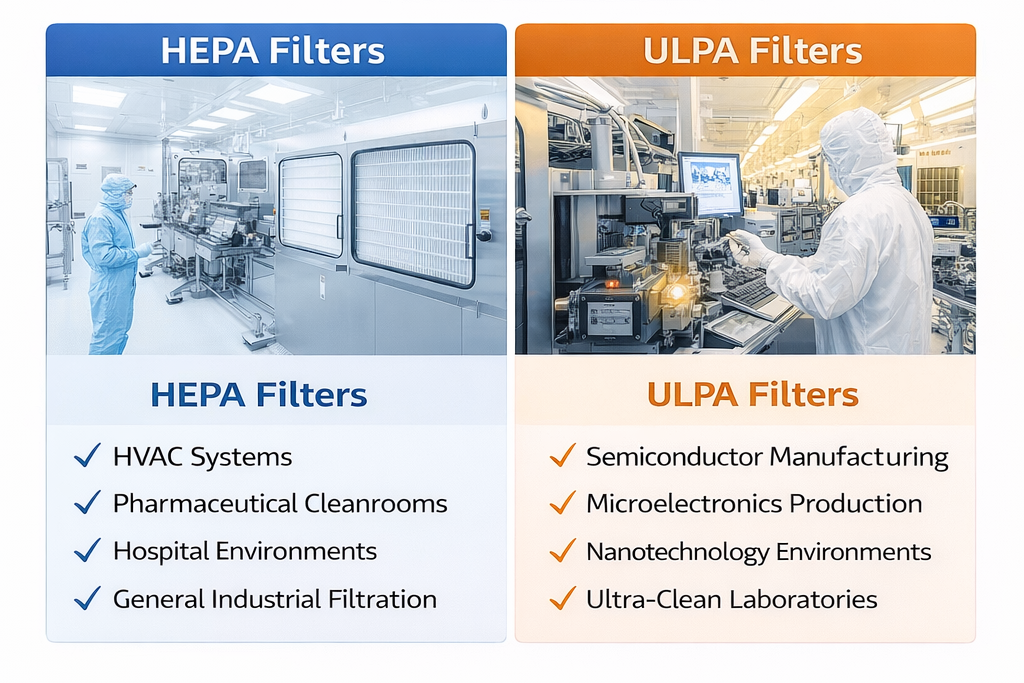
👉 Choosing ULPA over HEPA is only necessary when extremely stringent cleanliness levels are required.
Testing Requirements and Challenges
Both HEPA and ULPA filters must comply with strict testing standards such as ISO 29463.
Key Testing Methods Include:
- Efficiency testing (MPPS-based)
- Leak detection (scanning method)
- Airflow resistance measurement
Challenges in Testing:
- ULPA filters require higher precision instruments
- Leak detection must be more sensitive
- Airflow control must be extremely stable
👉 This is where advanced testing systems (like scanning benches) become essential.
How to Choose Between HEPA and ULPA
When selecting a filter, consider:
- Required cleanliness level
- Energy consumption (падение давления)
- Cost vs performance
- Industry standards
👉 In many cases, HEPA filters provide sufficient performance with lower operational costs.
Заключение
Both HEPA filter and ULPA filter play critical roles in air filtration.
- HEPA offers efficient and cost-effective filtration
- ULPA provides ultra-high performance for critical environments
Selecting the right filter depends on balancing performance requirements and system efficiency.
👉 Need help choosing or testing HEPA/ULPA filters? Contact SCPUR for expert solutions.