Air filtration plays a critical role in maintaining indoor air quality across HVAC systems, industrial environments, and commercial buildings. To ensure reliable performance, general air filters must be evaluated according to standardized testing methods and classification systems.
This article provides an overview of testing standards, filter classification, and test rig systems, helping manufacturers and laboratories select the right solutions for performance validation.
1. What Are General Air Filters?
General air filters are primarily used in HVAC and ventilation systems to remove airborne particles such as:
- Dust
- Pollen
- Fine particulate matter (ТЧ10, ТЧ2,5, ПМ1)
Unlike HEPA filters, general ventilation filters focus on real-world particle size distribution, making their testing standards more application-oriented.
2. Key Testing Standards for General Air Filters
2.1 ИСО 16890
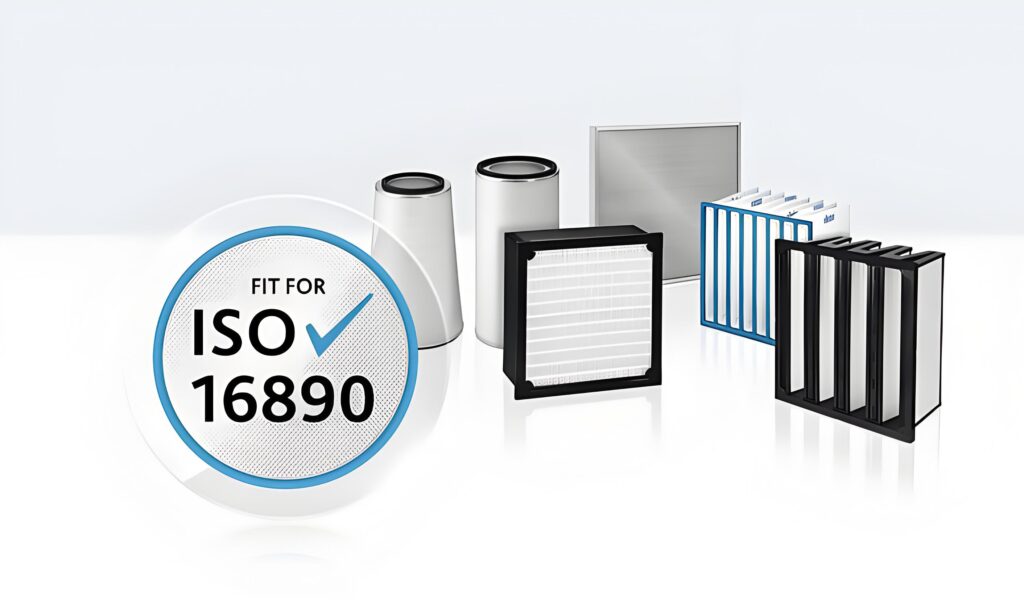
The ИСО 16890 standard is currently the most widely adopted global standard for general ventilation filters.
Ключевые особенности:
- Classifies filters based on ПМ1, ТЧ2,5, и эффективность PM10
- Reflects real atmospheric dust conditions
- Replaces older standards like EN 779
Система классификации:
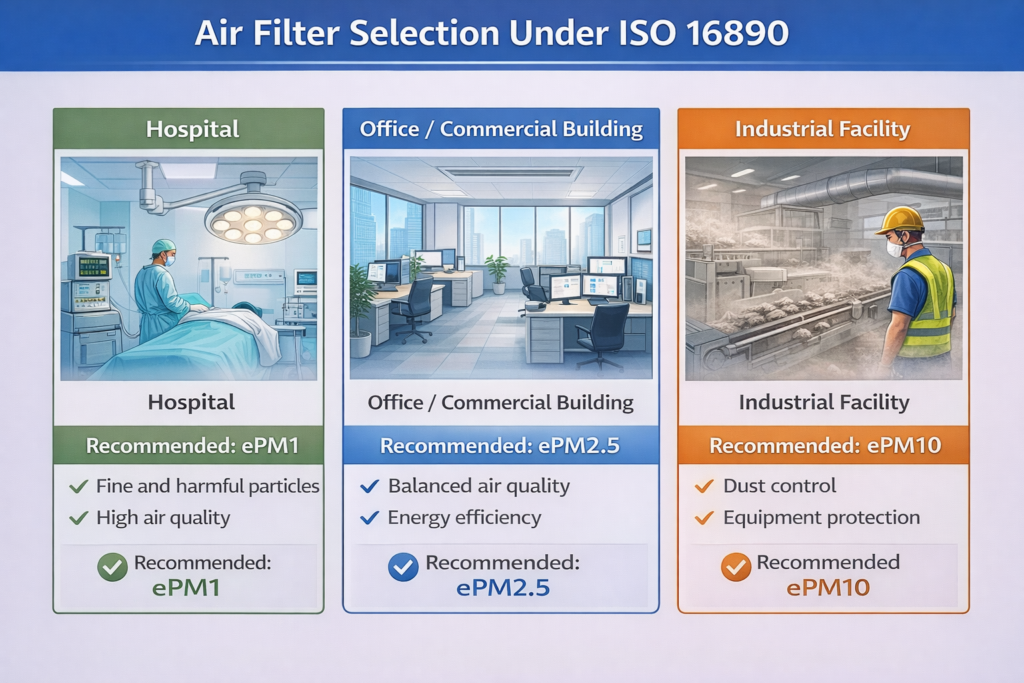
- еПМ1
- еPM2.5
- еPM10
- Грубый
👉 This standard provides a more realistic evaluation compared to traditional methods.
2.2 В 779 (Устаревший стандарт)
В 779 was previously used in Europe, classifying filters as:
- G1–G4 (фильтры грубой очистки)
- F5–F9 (фильтры тонкой очистки)
Although now largely replaced by ISO 16890, it is still referenced in some markets and legacy systems.
3. Filter Classification Overview
Modern classification focuses on particle size efficiency, rather than only arrestance:
| Классификация | Диапазон размеров частиц | Приложение |
|---|---|---|
| Грубый | >10 мкм | Предварительная фильтрация |
| еPM10 | ≤10 мкм | Commercial HVAC |
| еPM2.5 | ≤2,5 мкм | Indoor air quality control |
| еПМ1 | ≤1 мкм | High-performance ventilation |
This shift allows engineers to better match filters with real environmental requirements.
4. Test Methods and Key Parameters
To evaluate general air filters, several parameters are measured:
4.1 Эффективность фильтрации
- Based on particle size distribution
- Measured across multiple size ranges
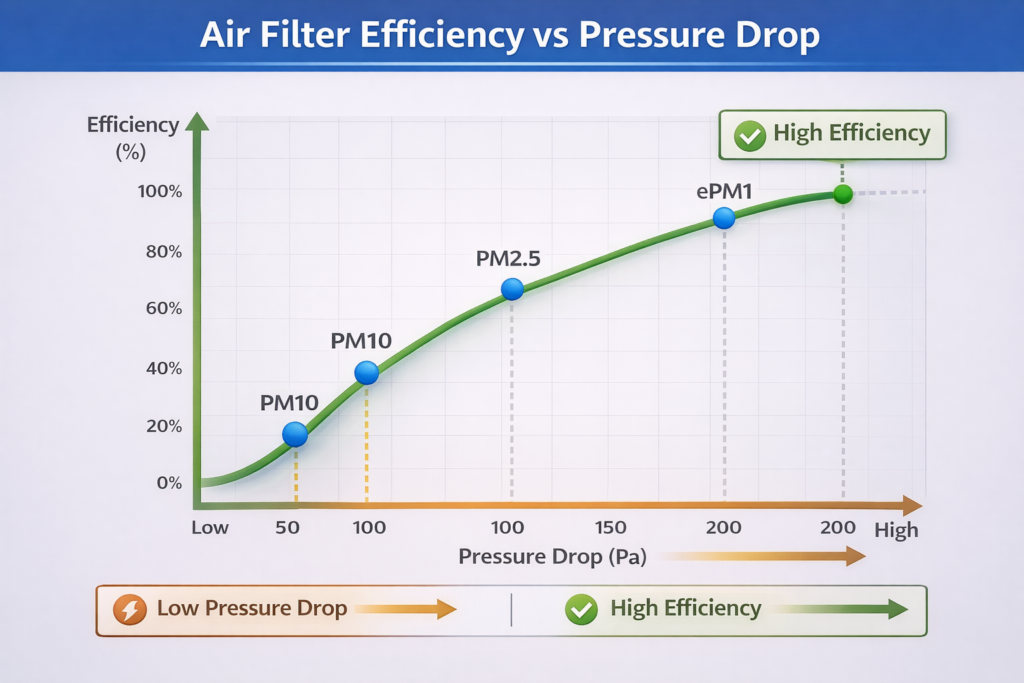
4.2 Падение давления
- Indicates airflow resistance
- Directly impacts energy consumption
4.3 Пылеудерживающая способность
- Determines service life
- Evaluated through loading tests
4.4 Discharge/Conditioning Process
- Required in ISO 16890
- Имитирует реальные условия эксплуатации
5. Test Rig Systems for Air Filter Evaluation
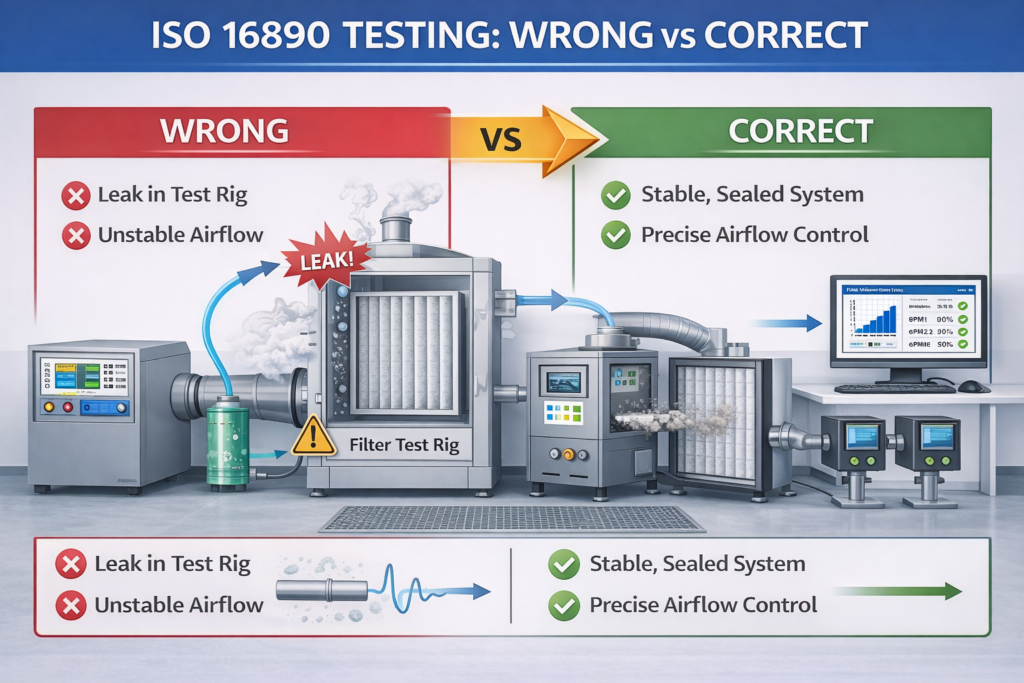
A complete air filter test system typically includes:
- Система генерации аэрозоля
- Particle measurement instruments
- Система управления воздушным потоком
- Система подачи пыли
- Программное обеспечение для сбора данных
These systems must provide:
✔ Stable airflow control
✔ Accurate particle measurement
✔ Repeatable test conditions
6. Рекомендуемое решение: SCPUR SC-16890 Test System
For laboratories and manufacturers seeking compliance with ISO 16890, тот
SC-16890 Система тестирования фильтров общей вентиляции from SCPUR is a highly reliable solution.
Ключевые преимущества
- Полностью соответствует ISO 16890
- Точный PM1 / ТЧ2,5 / Измерение эффективности PM10
- Automated test procedures for improved consistency
- Стабильный контроль воздушного потока и загрузки пыли
- User-friendly software for data analysis
Типичные применения
- HVAC filter manufacturers
- Сторонние испытательные лаборатории
- Научно-исследовательские учреждения
- Quality control departments
👉 The SC-16890 system ensures precise, repeatable, and standards-compliant testing, helping users improve product quality and meet international requirements.
7. Why Proper Testing Matters
Accurate testing of general air filters ensures:
- Compliance with international standards
- Improved indoor air quality
- Reduced energy consumption
- Better product competitiveness
Для производителей, investing in advanced test systems is essential to remain competitive in the global market.
8. Заключение
With the adoption of ИСО 16890, general air filter testing has shifted toward more realistic, particle-based evaluation methods.
Understanding testing standards, системы классификации, and selecting the right test rig—such as the SC-16890—are critical steps in ensuring reliable filter performance and market compliance.