
HEPA Filter Standards Explained: ISO 29463 vs EN 1822
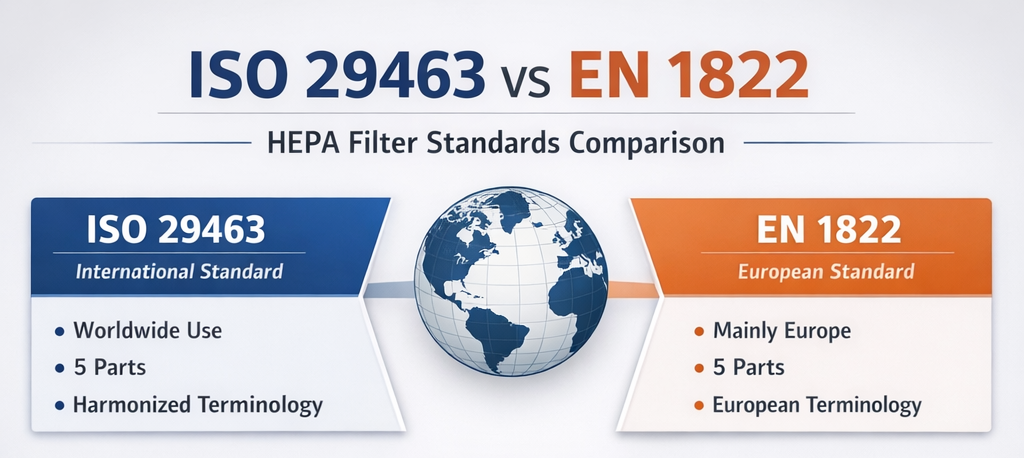
A clear comparison of ISO 29463 and EN 1822 HEPA filter standards, including classification, testing methods, and global applications.
The Role of Filter Media in Efficient Air Filtration Systems
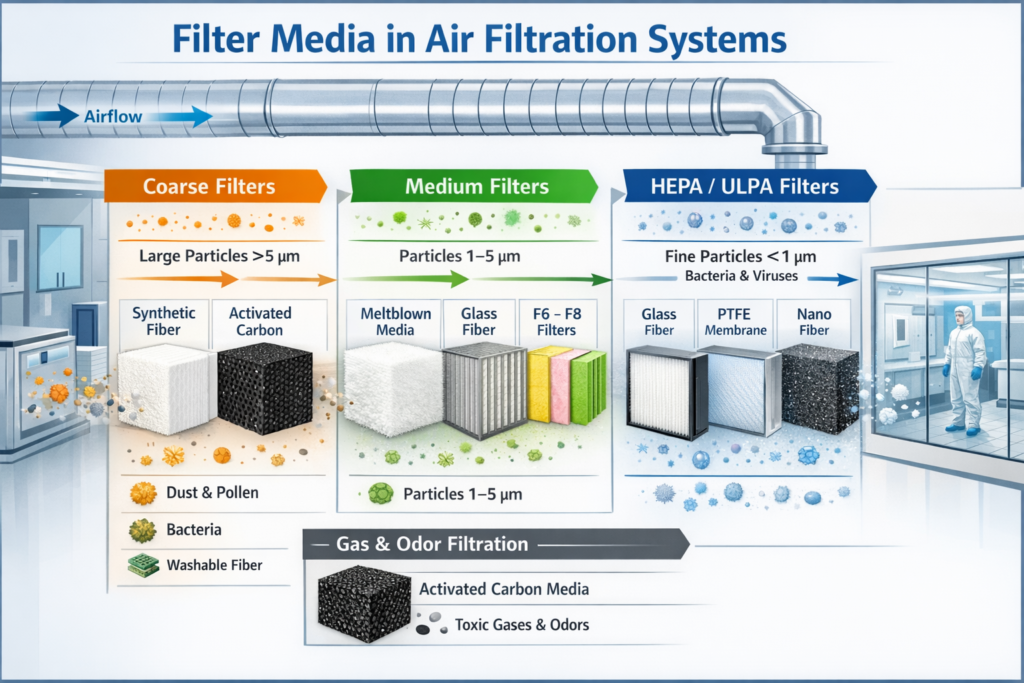
A comprehensive guide to filter media in air filtration systems, covering material types, performance characteristics, and their impact on efficiency, air quality, and system cost.
Why Filtration Efficiency May Decrease at Very Low Airflow: A Mechanism-Based Analysis
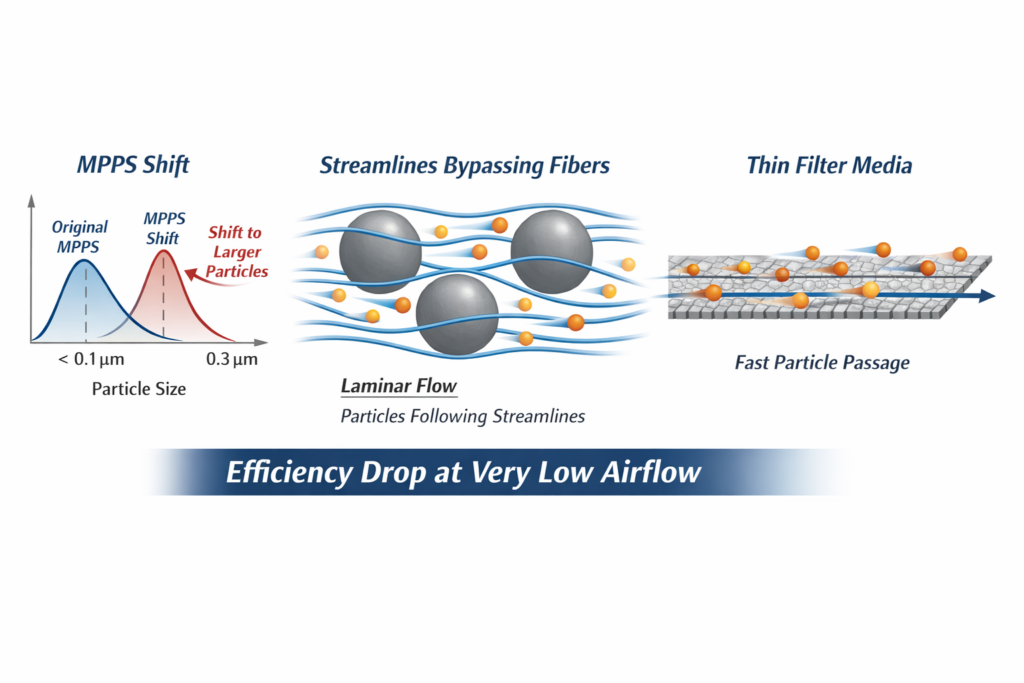
While lower airflow can theoretically enhance filtration via diffusion, real-world performance depends on:
Filter media structure
MPPS characteristics
Flow dynamics across the filter
Comparison Between HEPA and ULPA Filters: Key Differences Explained
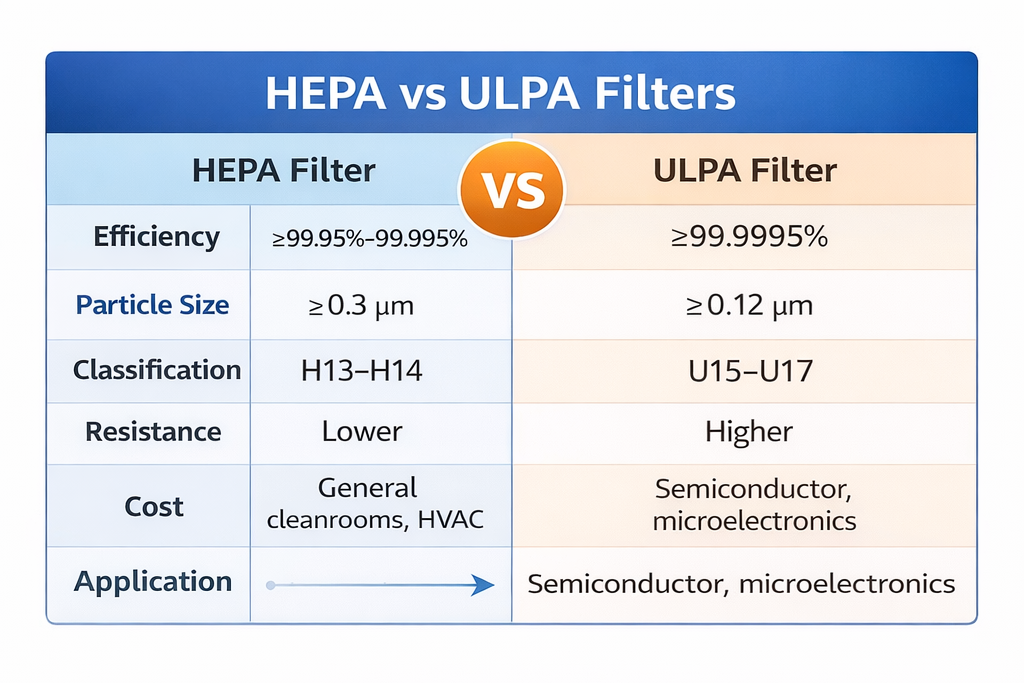
A clear comparison of HEPA and ULPA filters, covering efficiency, applications, and how to choose the right solution.
Deciphering ISO 16890: Understanding the Standard and the Role of Testing Equipment
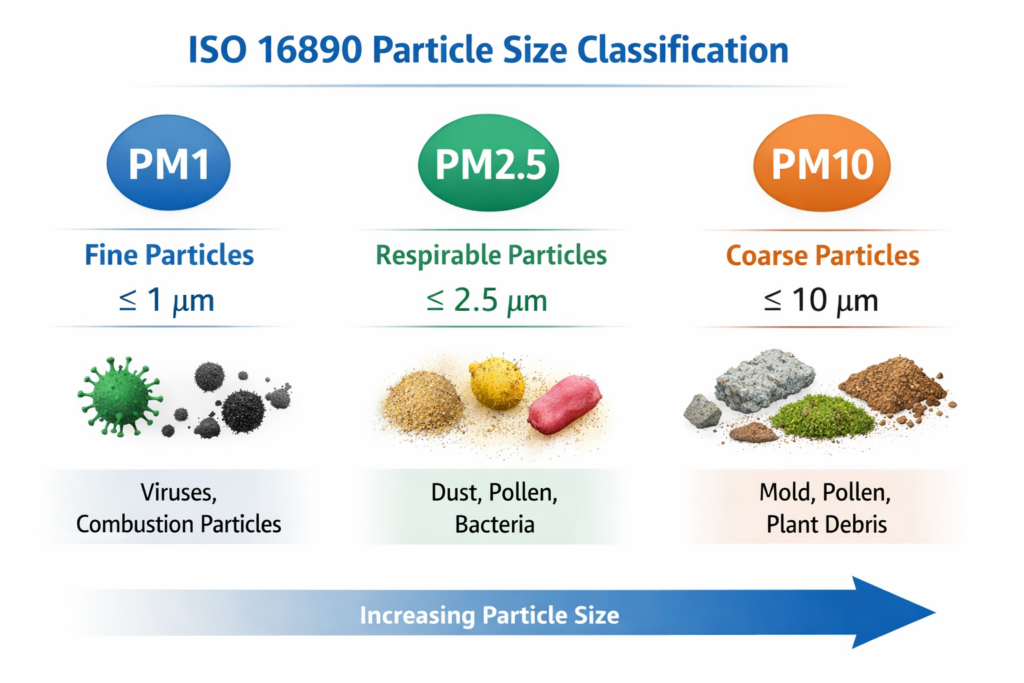
A complete guide to ISO 16890, explaining filter classification, PM efficiency, and the importance of testing equipment.
Pre Filters vs Fine Filters vs HEPA Filters: What’s the Difference?
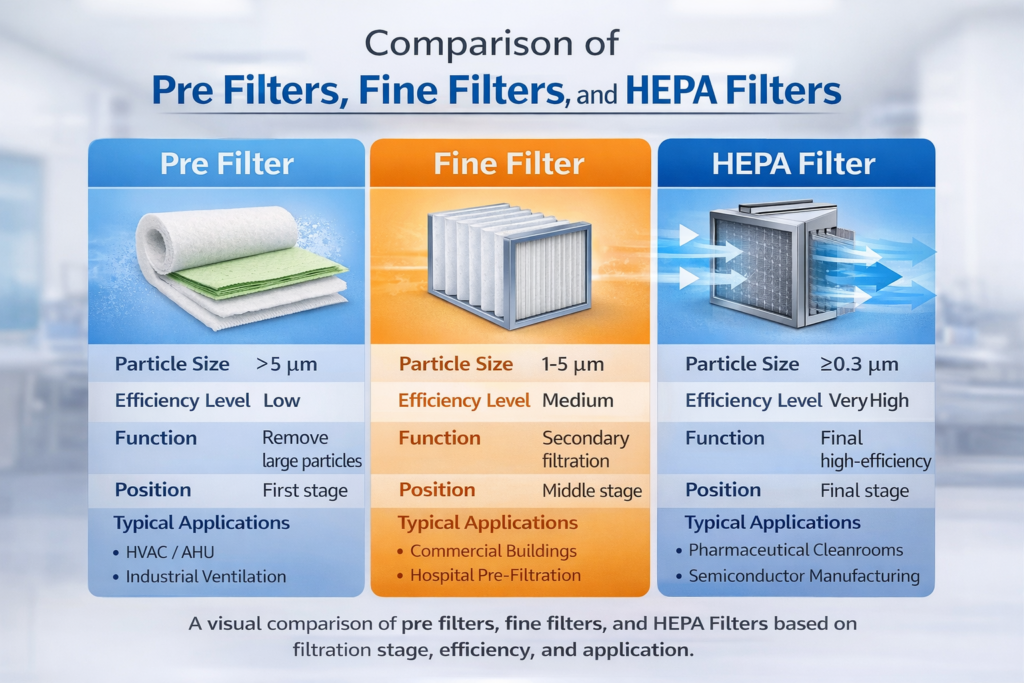
Understanding the differences between pre filters, fine filters, and HEPA filters is essential for selecting the right air filtration system. This guide explains their roles, efficiency levels, and applications.
Meet SCPUR at FILTECH 2026 – Hall 7 Stand H11
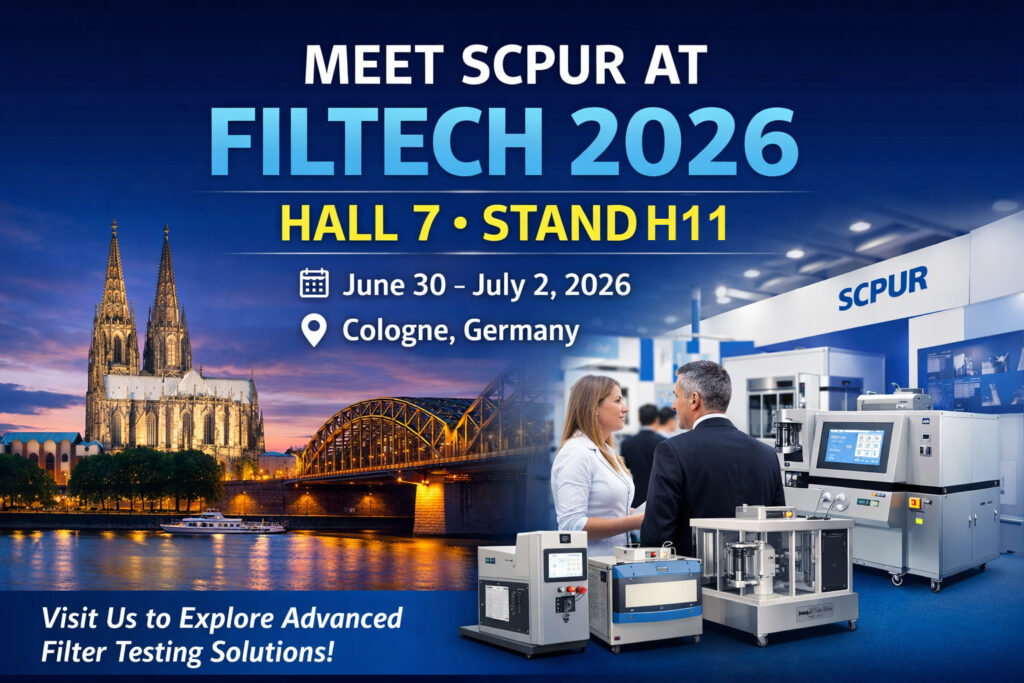
SCPUR will attend FILTECH 2026, one of the most important global events in the filtration industry.
The exhibition will take place in Cologne from June 30 to July 2, 2026.
3 Key Factors Affecting the Filtration Efficiency of HEPA Filters
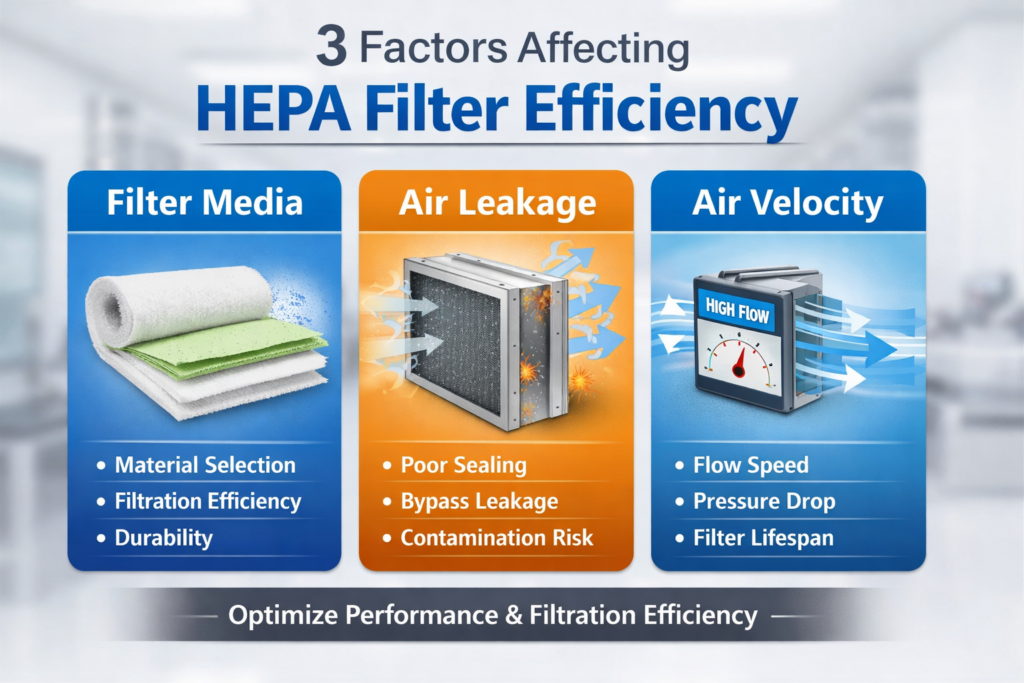
Understanding the factors affecting HEPA filter efficiency is essential for optimizing filtration performance. This article covers filter media, sealing performance, and airflow control, providing practical insights for improving system reliability.
Customer Success Story: Cost-Effective HEPA Filter Testing Solution in Spain
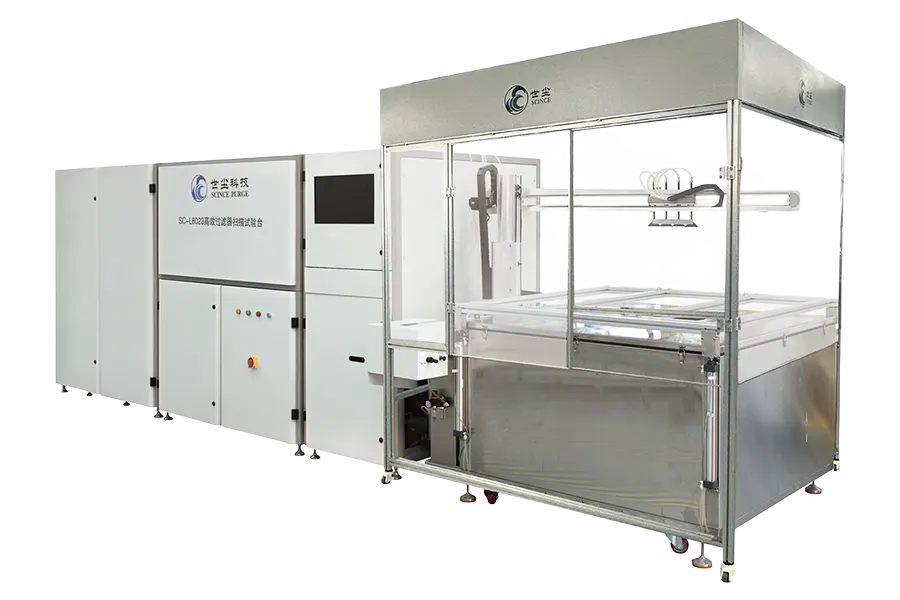
This case study presents a cost-effective HEPA filter testing solution for a manufacturer in Spain. By using the SCPUR SC-L8023 scanning system with a 0.3 μm particle counter, the client achieved reliable leak detection for H13 filters while complying with EN 1822 standards and significantly reducing equipment costs.
Five Common HEPA Filter Leak Detection Methods
HEPA filter leak detection is essential for ensuring cleanroom performance and compliance with industry standards. This article introduces five common leak detection methods, including sodium flame, oil mist, DOP, fluorescence, and particle counting methods. Among them, the particle counting scanning method has become the most widely used approach due to its high accuracy, real-time detection, and compliance with EN 1822 and ISO 29463 standards. Modern systems such as automatic HEPA filter leak test benches provide reliable and efficient solutions for manufacturers and laboratories.